There’s always something to howl about.

Author: Greg Swann (page 65 of 209)

Suburban Phoenix Real Estate Broker

iPad observation #9: I went digging through the heap of festering garbage that is the Vook and came home with an education.

Vain though it may be, tonight I looked in on my own past posts on the Vook. The writing was better than I remembered it, just exactly my kind of fun with words, but I do think I have been overly… forgiving… of this sleazy little… not vampire, even writ small… this skeezy little mosquito of a wannabe undead bloodsucker left over from the last century.

I am told that my swats at that mosquito incite much trashing and weeping amongst the very-publicly-aggrieved in the twitset — expressing, it would seem, the vitally-important necessity of brazenly butt-bussing besieged billionaires — but the plain truth is that I have not derided and denounced the Vook with anything like the rigor and vigor that this kind of epistemological emergency demands. One more way in which I feel myself blessed to have had the iPad to think about, this past week, is that thinking about the iPad and what it can and will do illustrate pellucidly what the Vook can’t and won’t do.

What the Vook actually does is lame and stupid. And while everything it does is fundamentally unnecessary, nevertheless, everything it does is very simple to design and to program. I do not know of anything the Vook does — neither the I-think-discontinued dedicated device nor the inevitable-fallback iPhone apps nor the “simulated” scenes of same found on the Vook.tv web site — that cannot be done on an ordinary web site. Easily. By anyone. With no programming or Javascript, and serving only as the broker in the embedded Flash video client/server transactions. In other words, if you can manage your own WordPress site, you can make “video books” that suck just as perfectly as a genuine Vook.

The sublime truth is, you can undoubtedly make much better Vooks than Brad Inman can, not alone because, if you have resolved to make the effort to Vook what you know, you’re going to make the effort to make your Vook — your gnuVook? — riveting and unassailable. That just by itself is tremendously exciting to me.

Now imagine every passion-driven web site out there re-envisioned as an Read more

Redfin.com’s Glenn Kelman comes to Scottsdale to beard the MLS lion.

Redfin.com CEO Glenn Kelman is in Scottsdale today and tomorrow for the MLSCOVE Conference, a gathering of MLS executives from all over the country.
Glenn made time for Cathleen and me this morning, buying us breakfast and regaling us with stories of the not-always-smooth path Redfin is traveling.

In real life, the man has a sweet and gentle — even beatific — nature. We saw this when he spoke at the first BloodhoundBlog Unchained event, winning a hostile audience over with a quiet, unaffected honesty.

That shone through again this morning, and, allowing time for Glenn’s son and our pets, we spent most of our time talking about real estate marketing issues: REOs versus short sales, new builds versus resale, the prospects for recovery, etc.

It’s funny, actually, to talk this way, because Glenn Kelman is a star in the real estate firmament, but in person he is fun and personable and very empathetic. Whatever our past differences, I respect and admire what he has been able to achieve with Redfin in such a short time. It was an honor to be able to spend some time with him.

iPad observation #7: When you’ve built a product that turns whole worlds upside down — what happens next?

I’ve got more to say, but I’m running out of Sunday. Here’s what’s next:

The iPad is the first move in the disintermediation — disintegration — of dozens of well-established institutions in our society.

Vendors of mediocre crap like Windows computers and Android cell phones are done for. Established on-line retailers are finished. Broadcasting in the spectrum is kaput. Best of all, the union-organized ignorami called schoolteachers will be put out of work.

In a circumstance such as I describe, what would you expect to happen?

My answer? Rotarian Socialism.

When the mediocre feel threatened, they pass laws. When the established face disestablishment, they pass laws. And when the ignorant get organized, they pass laws.

If anyone besides me could clearly foresee what a disruptive influence the iPad is going to be, they would already be clamoring for protection from the awful consequences of free choice.

Here’s the good news: Almost nobody can see what is going to happen. They might be myopic, but at least they’re very proud. They will insist — one may hope until it is too late — that Apple cannot be doing what it clearly is doing.

The bigger threat, in the near term, would be the Antitrust Laws, which say that your company can grow as big as it wants, as long as it’s really mediocre like Microsoft. But if you’re growing because you are satisfying — ecstatifying! — consumer demand, the Feds have to come in and bust your company up.

Here’s hoping that everything that matters in this revolution of the mind will have happened before the Rotarian Socialists can marshall their defenses.

And on that note, I will shut up.

< ?PHP include ("iPadObservations.php"); ?>

iPad observation #6: “We are all in the gutter, but some of us are looking at the stars.”

Oscar Wilde said that, the best kind of philosophy — bonum, verum, pulchrum — the good, the true and the beautiful.

I don’t hate it that we are monkeys biologically, genetically. But I hate it when people act like monkeys. Despite everything else that is going on, last week we caught a glimpse of the fully-human life. The prospect for an iPad-like device to take over education is cause enough to celebrate.

To the unchained human mind!

< ?PHP include ("iPadObservations.php"); ?>

iPad observation #5: Linking frees slaves, sometimes, but the future of mobile real estate is unknown to attorneys from New York City.

Here’s a true fact: I’m pretty much disgusted with the RE.net — which denomination I quarried with my own hands, back in my early days on the apellation trail. By now, just about everything looks to me like hoke, smoke, hustle and jive — smirking vendorsluts and the clueless suckers who can’t stop themselves from pridefully posturing about having procured their own plundering. I know that’s not fair — or not entirely fair — but it often seems to me, lately, that everything I have ever hated about the real estate business is successfully infesting the on-line world.

This will fail, all of it, in the end, and I’ll say why in detail when I get time. But for now I persevere by holding my nose and holding my ground. Whether it is the seemingly harmless simian chatter of net.monkeys desperate to prove their ape-titude to all the other net.monkeys or the craven schemes of hack vendors looking for just one more gullible fool to make their month, I’m well sick of it all. I haven’t looked at a feed-reader in many months, and my Twitterverse consists of my Best Beloved, Cathleen, and Teri Lussier.

The rest of the net, however, is a different thing. I’ve been following Apple tablet posts for months, and The Unofficial Apple Weblog is the only blog other than BloodhoundBlog whose client I have on my iPhone. On and off last week, and in greater earnest today, I’ve been looking for decent iPad posts from the RE.net.

Not hard to foresee, but Agent Shortbus doesn’t get it. Typically insipid kibitzing with no real understanding of the revolution the iPad will bring to the entire universe of commerce.

But, alas, the Shortbus set doesn’t have the vision to come up with a truly idiotic argument against using mobile devices to market real estate. This honor was earned by Rob Hahn, an attorney in New York City who doubles as a vendorslut consultant or a consultant to vendorsluts or some bizarre combination of the two. Realtors follow his musings religiously, apparently because they confuse being an attorney with being a Realtor, and Read more

iPad observation #4: Looking for a smart way to connect with your clients in a pull-based marketing world? Update your iPhone/iPad app.

I give away a lot of killer marketing ideas here, but I never worry about the competitive implications.

For one thing, I believe to the core of me that it’s raining soup, that wealth is pouring out of the skies and almost none of us is smart enough to reap that bounty.

But, second, I have learned through years of experience that, no matter how good my ideas are, almost nobody will ever follow through on them. We learned to sell, most of us, from people who believed to their cores that real money comes from laziness and lies. My way of marketing looks too much like work, I surmise, for people to adopt it in big numbers.

So much the better for me, I guess, although, to be frank, I would rather see Realtors doing more to earn the business — and the trust — of their clients.

In any case, here’s a way of thinking about marketing my way, a style of salesmanship based on integrity, transparency, follow-through and client satisfaction.

So: Start here: Build an iPhone/iPad app for your business. (See there? I just lost almost everybody!) The app has to be mission-critical and laser-focused on what your clients really need. Not — with emphasis — more idiotic self-promotion. If you’re not delivering something of value — in the estimation of your target-marketed end-users — you’re wasting your time.

Then get it on their iPhones and iPads. It ain’t easy, so you have to do it relentlessly. Ideally, everyone who can be expected to use you in the future — and to refer you to their friends and family members — should have your app on their iPhone or iPad.

Now you have the perfect means of staying in contact with those folks going forward. I’m not talking social networking, and my thinking is that drip marketing is probably a waste of effort. If they don’t unsubscribe, they’re going to ignore you except when they need you. It’s a pull-based marketing world, and your clients only really want to hear from you when they have a real estate need — not when you have a Read more

iPad observation #3: If your baby — or a caveman — can figure out how to use the iPad, the user-interface works

This is from an email exchange with Teri Lussier:

Here is the computer for the rest of us:

Imagine that civilization has collapsed. It’s happened before.

Now imagine a computer something like the iPad (but durable enough to have survived and solar-powered or whatever).

The ideal user-interface could be put to use by whomever finds that computer, with zero assumptions or expectations about what that person does or does not know about conceptual volitionality.

It will be babies (crawlers, not toddlers) who will tell us — by their interaction with it — if the iPad is there yet.

(FWIW, this is one of the things I’ve been waiting for all my life, a computer that can train its end-user literally from scratch — from nothing — from the complete collapse of all abstraction-based learning. If civilization ever does collapse again, a computer like this will deliver a much faster renaissance to the survivors.)

< ?PHP include ("iPadObservations.php"); ?>

iPad observation #1: The iPad is the computer for the rest of us

Cathleen bought her mother an iPhone just lately. Aloma Collins is 88, and her health is slowly failing. She’s in an awful spot, unable to do much and yet bored to tears.


The iPhone has become a bright spot on her horizon. Cathy loaded it with some apps, and Aloma has since figured out how to add others. She’s big on email and card games, so far. I don’t know if she’s surfing the web, but you can be sure she will be in due course.

When the Macintosh was introduced in 1984, it was advertised as being “The computer for the rest of us.” This was true at the time, when DOS was a ubiquitous zombie wraith afflicting the earth like the undead Unix. And Windows has sucked so perfectly, over the years, that the Mac segment of the computing marketplace has always had ample gloating space.

But what about Aloma? What about my own mother, who has so far managed to reject two EZ-to-use computing paradigms?

The iPad is the answer, or the first step toward an answer. For everyone who gets frustrated by the arcane modalities of the PC world, the iPad offers instant results, instant gratification, instant satisfaction.

Many of our ideas about computing are based in a puritanical reading of Dante’s Inferno: “How can you hope to enter data processing heaven without first having trundled your way through data processing hell?” This is hugely satisfying to many of us living the wired life, especially Windows and Unix geeks, and most especially Microsoft Certified Cash Sinks or whatever the reformat-that-hard-disk cadre is called.

To whom is it unsatisfying? How about the 50% of America that has so far managed to resist the wired life? How about Cathleen’s mother, and my own? How about your Nana? How about her grandchildren? The iPad is the computer for people who do not want to have to be told how to use a computer — the computer for the rest of us.

I’ve been thinking about and arguing about this idea for days, but the iPad is igniting a scenius all across the net. Here’s a post from Read more

Regrettably, we have to rethink all of our ideas about staging homes

How are we ever going to top this?

Oh, yes. It’s real. Mrs. Buyer said, “I don’t even want to think about what happened in that room.” My risposte? “Nothing happened in that room!”

But: Even so: It’s an interesting real estate problem, isn’t it? It would be $500, at most, to repaint that room. And yet every buyer who has seen it will have been revolted. What’s the cash value of that revulsion? At least $15,000 off the comps — and it’s still not selling…

The Apple iPad is a category-cataclysm and no one knows it yet: Double-thinking Steve Jobs and his double-suss of the hi-tech marketplace

Here’s the question that will appear in the deep-think mainstream media analyses of the brand new Apple iPad:
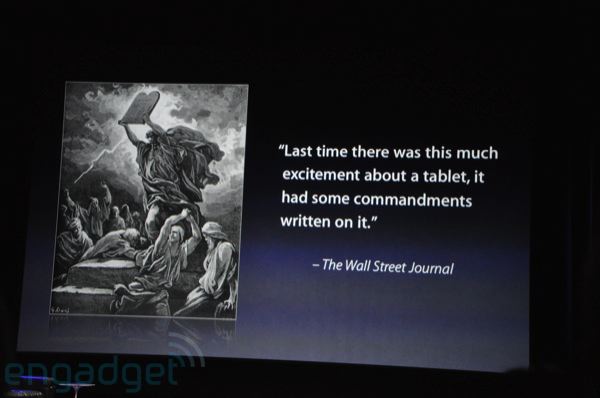
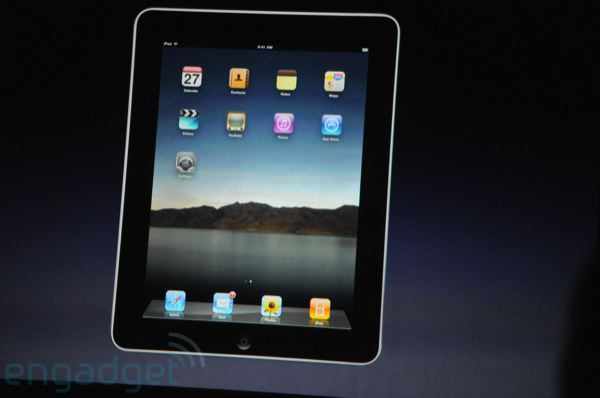
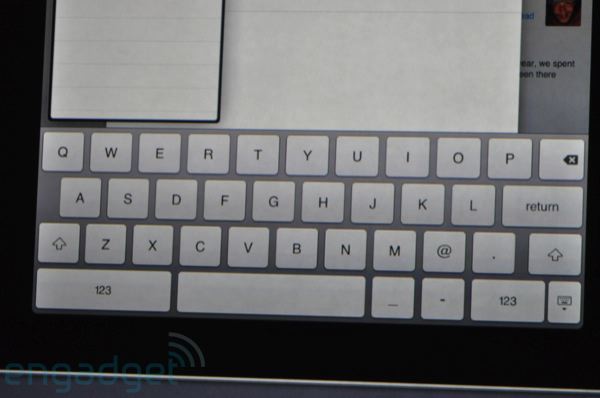
How can hardware vendors answer Apple’s new tablet?

Guess what? It’s a dumb question.

Slightly brighter lights might ponder this, instead:

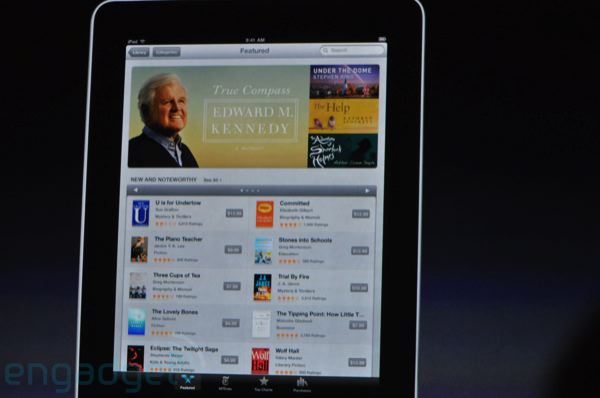
How can Amazon compete with the new iBook store?

And: Yes: It’s another dumb question.

Here’s why: With the iPad, Apple CEO Steve Jobs has managed to double-suss the entire hi-tech marketplace. After 30-plus years of being ridiculed by nerdy dipshits like Bill Gates, Apple is poised to take over everything that matters in the new economy.

And, as far as I can tell, no one so far has even figured out what they’re doing.

Why is it that all of the supposed iPhone killers have fared so badly in the marketplace? Because the iPhone is not a cell-phone. It’s a software experience packaged as a cell-phone. Phone vendors can compete well enough with the actual phone, but they have nothing at all to offer as a software experience. Wannabe iPhone clones only have apps at all because iPhone app developers port their products to BlackBerry, Palm and Droid devices.

And if you’re about to get huffy about hardware or performance or open-source or whatever, stand down. We’re not done yet.

The true fact is, the iPhone isn’t a hardware product, and it’s only a software experience from the point of view of end users.

What is the iPhone, really? It’s the user-interface for the iTunes App Store. For iTunes generally, of course, but mainly for the App store.

So what is the iPad, really? It’s portable retail store-front for everything sold at the iTunes store.

Apps. Movies. Music. Books. And now newspapers and magazines.

The iPad is not a tablet computer, so all of the supposed iPad killers that will be introduced in the coming months will fail, just as all the iPhone killers have failed. Hardware vendors will kill themselves eclipsing the iPad’s hardware in every possible way — and they will fail dismally in the marketplace.

The iPad will be a great hardware experience coupled with the typically-superb Apple software experience. That goes without saying. But none of that will matter.

Here’s what matters: The Read more

Apple tablet computer announcement liveblogging now…

…at Engadget.

It’s called the iPad…

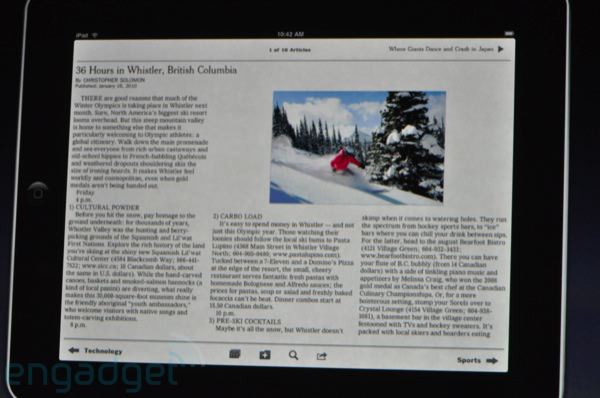
Dear Brad Inman, while you weren’t Vooking, Steve Jobs stole your lunch: “Embedded video inside of articles that can be played.”

Don’t weep, though. It’s a Kindle-killer, too, as expected:

How free does information want to be? The marginal value of digital content is the discounted perceived cost of the hassle and risk of obtaining an acceptable free alternative. Why don’t books sell? They’re priced too high. Steve Jobs will take care of that, just as he did with MP3s.

Note to Richard Riccelli: “You can change the font… whatever you want.”

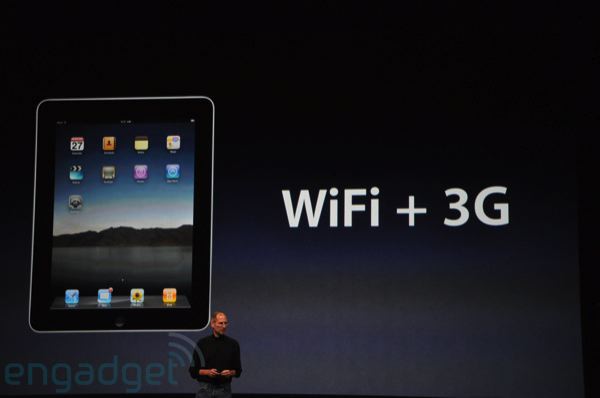
USB, Bluetooth, Wi-Fi and 3G:

An unlimited data plan from AT&T for $29.99 a month.

How much would you pay? Starts at $499…

ATTN: ZipForms, DocuSign, FlexMLS: Get on this NOW!

No word on multi-tasking, use of the iPad as a phone or syncing/pairing with the iPhone.

But: It rocks as an internet device, with Numbers, Pages and Keynote from iWorks available. Listers can use Keynote to sway sellers, and Buyer’s Agents can live without paper. This is a rockin’ device for any salesperson.

Bottom line: Wicked cool.

New York Times, top-middle of the front page. Take that, Obama!

Kindle? Dead. Nook? Dead. Vook? Dead. Zune? Double-dead.

< ?PHP include ("iPadObservations.php"); ?>

Shimmers of the shadow: Is your local REO inventory going up?

Strictly anecdotal — and I would be delighted to be wrong about this.

First, the inventory of the homes I track for investors has been rising slowly but steadily since mid-October. Not an obscene increase, but sales are way up as prices have wallowed in more or less the same place since last March or April. A lot of investors are calling “bottom!” with their cold, hard-to-come-by cash — and yet available inventory is going up, not down. And prices? In December, way down.

Then consider this: I have an REO negotiation going on in a condo community where the quantity of the one floorplan my buyers are interested in jumped 50% in two weeks, from 13 to 20 units just like that, all of them priced right or within shooting-down distance.

It seems to be getting easier and easier to get just the right deal for buyers. Even in overbuilt Phoenix, last summer and early fall played like a seller’s market, but by now it feels to me as though the table is swiftly turning.

And all of that leads me to wonder if we’re finally seeing the much-hypothesized, much-denied shadow inventory.

Am I seeing my own shadow, or is there something going on?

Barney Frank: “I believe this committee will be recommending, abolishing Fannie Mae and Freddie Mac in their current form and coming up with a whole new system of housing finance.”

To say anything at all would be way too much. From the Wall Street Journal:

“The remedy here is…as I believe this committee will be recommending, abolishing Fannie Mae and Freddie Mac in their current form and coming up with a whole new system of housing finance,” said Rep. Barney Frank (D., Mass.), the chairman of the House Financial Services Committee.

His comments initially rippled through bond markets on concerns that the government might pull away from the mortgage market. Many believe that’s unlikely and that any revamp would include continued government involvement. The government took over the companies in September 2008 as loan losses mounted.

Some Republicans have argued that the companies should ultimately be reduced in size and privatized, while at other end of the spectrum, some analysts have recommended turning the companies into government agencies. But several industry groups and academics have suggested that the government is likely to continue playing at least some role in the future of the companies.

One such report came from analysts at Standard & Poor’s this past week. “It’s hard for us to imagine” how enough capital could be attracted to replace Fannie and Freddie with stand-alone private companies that would be able to offer low-cost funding for 30-year fixed-rate mortgages, the analysts wrote.

Some analysts have argued that starting from scratch could create more problems than they would solve, in part because Fannie and Freddie own or guarantee around half of the nation’s $11 trillion in home mortgages. “Blue sky ideas are great, but they take a long time to happen,” said Mahesh Swaminathan, senior mortgage strategist at Credit Suisse, at a conference last month. “When you have $5 trillion of agency mortgages, you can’t really orphan them.”

Mr. Frank, who didn’t elaborate on forthcoming recommendations, said last month that one possible revamp could merge some functions of Fannie and Freddie that overlap with the Federal Housing Administration into the government mortgage-insurance agency.