There’s always something to howl about.

Author: Greg Swann (page 66 of 209)

Suburban Phoenix Real Estate Broker

What is the Apple “tablet” computer going to look like?

Some semi-informed speculation from the Financial Times:

The name and functions of the new machine are not known, but intense speculation and leaks from component manufacturers and business allies have pointed to a number of expected characteristics.

The consensus is that the tablet will have a large screen, perhaps 10 inches on the diagonal, and run the same operating system as the iPhone and iPod, as opposed to the Mac computers.

That means that it would be able to handle many of the more than 100,000 applications – or apps – that are designed to run on the smaller gadgets. A touchscreen would be a significant feature.

Video game manufacturers expect the device to have strong appeal for their audience.

The iPhone and iPod are already challenging portable products from Sony and other console makers as popular gaming devices.

Among the big unanswered questions are what internet connectivity will come with the tablet and what other forms of entertainment it will provide.

Apple has been in discussions with cable network channels about carrying bundles of video for a monthly fee.

Book and magazine publishers, meanwhile, have been hoping that Apple might enliven their electronic formats.

Time Warner recently showed off a conceptual version of an electronic, full-colour Sports Illustrated magazine that allowed for fast-flipping, zooming and other functions in need of support from new hardware.

Don’t Vook now, but dedicated device makers might want to slash prices on standing inventory — and cancel those reorders. AT&T told us yesterday that they’re going to be in the game, so figure 3/3.5/4G wireless plus Wi-Fi. This is going to rock.

Adding two hounds to the pound: Introducing Harry Bisel and Scott Schang

As promised, I’m adding two new writers to our pack today.

Scott Schang is a long-time contributor to our comments threads. Scott has come to both of the BloodhoundBlog Unchained events held in Phoenix, and he may be the best success story to come of Unchained so far. Scott has devoted his attentions to honing his prospecting and conversion systems, and he’ll be talking to us about that and more.

Harry Bisel has led a rich, full life. A commercial photographer who made the shift into real estate, and then shifted aback out into real estate photography. Harry’s photos are simply breathtaking, awe-inspiring, everything real estate photography should be.

Both of these gentleman have a ton to teach us. I’m delighted to have them writing with us.

What does “information wants to be free” really mean? It doesn’t matter how long you spent making that mudpie, it’s worth nothing to me.

Reflecting on Jeff Brown’s post on economics, which in turn referenced an argument by Malcolm Galdwell, I made a short movie explicating the meme “information wants to be free.”

Cliff’s Notes: When a market good is so redundantly abundant as to be, essentially, ubiquitous and unavoidable, its market price will tend to plummet to zero. It doesn’t matter what the sellers of those goods might want to earn. All that matters, in this context, is what buyers are willing to pay. If the discounted probability of procuring an acceptable alternative is very high, then the price will tend to be very low.

Ordinary information is ubiquitous and unavoidable, and, therefore, the market price it can command is effectively zero. What the sellers or anyone else thinks about that is irrelevant. I have no reason to pay even a penny to you if I can get “just as good” next door for free.

That in turn references the very first post I wrote for BloodhoundBlog:

If almost-as-good is free or nearly free, what is the market value of slightly-better?

The answer? Almost always zero.

In the clip I talk about the difference in the paywalls of the Wall Street Journal and the New York Times. Ironically enough, there comes news this morning that the Times plans to finish off its slow suicide with yet another tilt at a paywall. Much good may it do them.

Here’s the video:

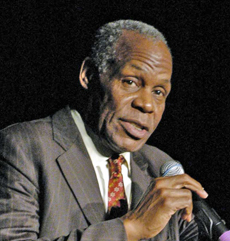
Were Pat Robertson and Danny Glover separated at birth?

Click the pix.

The people of Haiti may not have food, clean water, fuel, homes, medical supplies or physical security, but at least they suffer no shortage of venal, vile, self-serving, posturing ghouls feeding on the festering carcasses of the dead and riding high-horseback on the wracked bodies of the living.

We flick around with the remote control, looking for thrilling dramas featuring ravenous, blood-thirsty vampires, not knowing, all the while, that that kind of “entertainment” is best found on the all-news channels.

But derision and contempt will only get you so far. If you cling to the outdated, irrational belief that earthquakes are caused by tectonic forces, put your shoulder beside Tom Vanderwell’s and do something good for people who desperately need your help.

From the what-took-you-so-long? department: Introducing Tom Johnson

Joining us today as a contributor is a frequent commenter and long-time friend of BloodhoundBlog, Tom Johnson.

I’ve thought about adding Tom to our roster more than once over the year, but I never pulled the trigger. It was my soul’s sister in Dayton, Teri Lussier, who made the connection I had been missing.

Tom is a Realtor in Houston, which necessarily implies that he likes to drive a lot. Wife, kid, dog. What else do you need to know?

Seriously, the gift Tom brings to our conversations is a wry irony, pungent without being cynical. His bullshit detector is finely tuned, and his sense of humor is honed to a razor’s edge.

I’ll be adding another writer next week, as well as cleaning house, something I haven’t done for a while. I have mail from a bunch of folks who want to write with us, and I’m thinking I want to come up with a new way of dealing with that. I’ll announce the new policy when I figure out what it is.

Meanwhile: Welcome to BloodhoundBlog, Tom. I’m sorry that I didn’t get to this sooner, but I know we will all be delighted to have you here.

What form should BloodhoundBlog Unchained take this May?

I’ve heard from a number of people privately asking about the prospects for another BloodhoundBlog Unchained in Phoenix this May. So far I’ve not done anything about this — this for a couple of reasons.

First, I don’t know what to do in terms of content. We’re doing a lot of interesting things, but I’m not sure it’s the kind of material I can teach. Of course, there’s all kinds of other stuff out there, but I’m not sure how it coheres.

Second, I don’t know what to do about the show. The format we used last year — 72 hours of total immersion — was very successful, but it was also a boatload of work. (When the RE.net trolls get caught with their hands in the cookie jar, they like to come here and insist that Unchained is a profit-making business. I’m sure my wife will be gratified to learn this.)

To my mind, the most satisfying Unchained experience so far was the
Scenius on Swallow Hill Road
. Not the show we did in Orlando, which was good, but the more or less continuous Scenius we ran from the house we rented as our accommodations for the trip.

That’s an appealing scenario, but it’s decidedly limited in the number of people who can attend. That’s not necessarily a bad thing — for me — but it might not work so well for you.

So: I think I need to hear from you. If you want to do Unchained this year, speak up. But if you do want to do this, be prepared to put up your money. Whatever we choose for meeting space and accommodations, they’re going to want to see the dough before they commit to anything.

Here’s my pledge, in return: If we do Unchained this year, we will do it to nine decimal places, as always. We will take you places no one else is going, to put you even further beyond your competition.

But don’t dawdle. I’m going to have to make a go or no-go decision shortly. If you want to do Unchained this year, make the leap now.

DISCerning my ideal real estate team: Which personality profiles will work best in which position?

Last Sunday’s New York Times featured an article about a foreclosure caravan in South Florida. It was the usual NYT sob story, but what popped out at me was the real estate agent. All through the piece he is arm-twisting his victims, and in several places his is plainly guilty of unsolicited — and very likely ill-advised — financial planning.

This morning on ActiveRain I read a post from an agent essentially boasting that he blacklists certain agents listings, keeping them from his buyer clients so that he won’t have to deal with practitioners of whom he disapproves.

I’ve been a real estate broker since October of 2005. If you’ve ever wondered why we don’t have agents, those two examples are perfectly illustrative. Presumably both of these Realtors are acceptable to their own brokers, but I would sever both of them in a heartbeat. They are each one of them a lawsuit waiting to happen, and I could not be rid of either one of them quickly enough.

Except that I will probably never have this problem, because, even when we do start to recruit agents, I will never have anything to do with people who would even think of putting their own interests ahead of the client’s.

You may at this point want to protest that I am being too harsh, but my belief is that Caesar’s wife must be above reproach. Never-been-sued is not a mark of pride. What we want is to achieve a level of rigor and candor in the work we do such that there is no room in our clients’ mind for even an implied accusation. We will have done our jobs the way I want them done when there is no possibility of even a hint of a doubt that we would ever serve our own interests at the expense of the interests of the people we work for.

People here and elsewhere have written a lot about the ideal post-Web-2.0 real estate brokerage. I’ve not participated in those discussions, because it’s not something I’m interested in. I don’t care how someone is going to make a brokerage of Read more

Are the uninformed chatterboxes in your area insisting that the real estate market has recovered? You may want to defer the celebration. Even so, this could be the golden moment for investors in Phoenix.

I’ve known for six months or more that there was a sweet spot on the horizon for investors and other highly-solvent buyers. That event was delayed by the first-time home-buyer’s tax credit. Today’s news about declines in the number of pending purchase contracts is a symptom of the market returning to an unstimulated level of demand. I watched the dropoff reflected in today’s news as it happened last fall. Lenders cut off new applications for first-timers and, just like that, price pressure eased, available inventories started to rise and it came to be a lot easier to get a house under contract.

We’re all waiting for the other shoe — the shadow inventory — to drop, but the supply of the homes I want most for my investors has almost doubled since mid-October, from around 350 units then to just over 600 today.

Here’s even better news for buyers (not for banks): Prices are going down.

This is the Cliff’s Notes for the last four months, as reflected in the BloodhoundRealty.com Market Basket of Homes:

September: +3.15%
October: +2.14%
November: +2.22%
December: -8.03%

That’s a huge drop for December — giving back almost everything we’ve gained since April, 2009. But, interestingly enough, the ratio of sales price to list price was positive. In other words, there is still competition for listed homes, but list prices are dropping.

I don’t know how it is by you, but this is the perfect storm for investors in Metropolitan Phoenix. The homes are in much better condition than they were this time last year, and the prices are at hovering just above the 2009 low.

Are we at the bottom? Feels like it — but we’re going to be here for a while. Positive cash flow is easy, but cash flow is all there is right now. If you’re not a buy-and-hold investor, Phoenix is not for you. I’m sure that’s true in most rental markets.

But if you’re thinking of buying a rental home anywhere in the South or Southwest, reflect on this: This could be the coldest winter in 25 years. Whether they can afford to or not, people are going to move. When Read more

You know what? Despite everything: Happy New Year!

I wrote this last night in a comment to a post:

The United States is being run as a kleptocracy, but instead of plundering the treasury and the accumulated wealth of the nation in behalf of a small criminal conspiracy, we rob from a rapidly-diminishing productive sector in behalf of a vast and ever-burgeoning population of moochers — at all strata of society.

You can’t flip on the television without running across a cipher for your own grandmother proudly announcing how some politically-connected vendor has taught her how to rape the taxpayers — which is to say you and your kids, her own great-grandchildren — in her own behalf. This will be the real triumph of Obamacare — to turn every last resident of this once-proud nation into sniveling beggars, each one trying to snap up more benefits than his neighbor.

We don’t have to eat each others’ flesh to be cannibals, and it seems plausible to me that we will not be suffered to live a life of freedom and independence, in the very near future. The entitlement mentality is such a shameful thing that the people who use it as a means of enslaving each other will not suffer the contradiction of an objective renunciation of their creed. In any case, once you’ve eaten a meal taken by theft, you’re not as apt to make noises about law and order, property rights, all that sanctimonious nonsense. Who am I do judge, once I’ve drunk my neighbor’s blood?

That’s dour, but I’m afraid it’s much too exact. Yes, I know that things are always worse than they seem, that the doppler effect of the noise that is the news makes the onrushing crisis sound more ominous even as receding events seem to race away harmlessly. But I fear we are at a tipping point, a place where the grasshoppers so far outnumber the ants that there really is no hope, going forward, for a life based on self-reliance, on philosophical egoism, political individualism and economic free enterprise. The United States has resolved to resolve the contradiction of chattel slavery by making slaves of Read more

Using the DISC system to understand the boys of Entourage

I’ve talked about the DISC system of personality profiling in past. I’m talking about it again, now, because I want to use it to discuss how we are going to build our ideal real estate team. For now, I just want to talk about thinking in a DISC-like way, using on-the-fly DISC analysis to evaluate and respond to the people you come into contact with.

Here are the four DISC categories:

Dominance; Influence; Steadiness; Compliance

That’s less than useful. Here’s a better way of understand what DISC is measuring:

D’s are drivers. They’re all about getting things Done. A high-D (c’est moi) can be a prick to work for (yeah), but every successful boss will have a lot of D in his personality.

I’s are all about Image, about the way other people perceive them, their accomplishments and their stuff. Many successful salespeople are strong on I traits.

S’s are strongly associated with family life and social communities generally. If your office has a Secret Santa gift exchange, it’s being run by an S.

C’s are associated with calculation, computation and a comprehensive attention to detail. If the till comes up three cents short, a D will toss in some coins to get on with business, but a C will keep counting and counting until the cause of the discrepancy is uncovered.

Here are two more axes for understanding DISC profiling:

D’s and I’s are about telling, where S’s and C’s are about asking.

And D’s and C’s are about process, where I’s and S’s are about people.

It would be terribly convenient (at least for me) if people fell neatly into one DISC quadrant or another, but of course they don’t. Some people are chameleons, with just about the same amounts of each characteristic. More commonly, people will tend to have one strong trait and another that is fairly strong, with the other two coming in less strong.

So, for example, in my own idealized self-image, I am all D and nothing else. But in the reality of day-to-day life, I am a high D with relatively high I-like tendencies — which you could guess just by reading this post. I want Read more

Unchained Melodies: A sublime mash-up of William Shatner’s cover version of Common People

I have time to write software today for the first time in a while — which is well because we need it. While I was working, Radio Paradise (commercial-free semi-hip music for middle-aged white people) played William Shatner’s cover of Pulp’s Common People, and it made me so nuts I had to go out and find a clip.

Glad I did, because this mash-up is just perfect. I grew up in a grimy industrial town in downstate Illinois, way over on the wrong side of the tracks. I was lucky to have school teachers who were old enough to have pre-dated the unionization of compulsory illiteracy — but that just means I know how to tell you to go have safe sex with yourself in all the best dead languages. If you’ve never bought a steak without weighing the cost, this song is for you.

Why are people in New York and Connecticut unhappy, while the folks in Louisiana and Tennessee are more satisfied with their lives? The obvious answer is the true one: Taxes and spending.

More from The Wall Street Journal: People in high-tax states are less satisfied with their lives than those in low-tax states.

Who knew?

That’s not a fair question. Everyone who can do math already knew this. But what’s interesting is that it points the way forward for all states, especially the ones currently losing their high-earning tax-slaves to less onerous tax-plantations: Cut taxes. Cut spending. Get rid of your kleptocratic union laws.

Or: In the words of John Galt, “Get the hell out of my way!”

The study suggests that quality of life heavily influences happiness. This may seem obvious, but until this study, social scientists have struggled to develop a model that supports this hypothesis. Now we know that people who say they’re satisfied with their lives aren’t just delusional or overly optimistic, and people who say they’re unsatisfied aren’t just pessimists. People have legitimate reasons to be happy or unhappy.

And well, high taxes seem to be a big reason — ostensibly an even bigger reason than weather given that California is one of the unhappiest states and inclement Louisiana is the happiest. Further, considering how much New York’s crime rate has dropped and schools have improved in the last decade, taxes seem to overwhelm even these two critical factors in the happiness equation. According to the Tax Foundation 2008 analysis, three of the top five unhappiest states—New York, Connecticut and New Jersey—have the highest state-local tax burdens. On the other hand, four of the top five happiest states—Louisiana, Florida, Tennessee and Arizona—are among the states with the lowest state-local tax burdens. True, correlation doesn’t prove causation, and high taxes alone don’t always make people miserable, but there’s something going on here.

In states with high property, income, and sales taxes like New York, people have less money to spend on other things that make them happy. They have less money to spend on vacations, hobbies, home improvements, eating out and child care. Another problem may be that people receive a low return on their tax dollars. The study’s authors note that people are least happy in states that impose high taxes but don’t provide Read more

Making New Year’s resolutions is easy. It’s keeping them that’s hard. How people are getting year ’round results from their year-end goals.

From The Wall Street Journal comes more than resolutions. More, even, than sheer resolve. A set of specific tactics and techniques to fulfill your New Year’s resolutions enduringly.

It is no secret that the odds against keeping a New Year’s resolution are steep. Only about 19% of people who make them actually stick to their vows for two years, according to research led by John Norcross, a psychology professor at the University of Scranton in Pennsylvania.

But those discouraging statistics mask an important truth: The simple act of making a New Year’s resolution sharply improves your chances of accomplishing a positive change—by a factor of 10. Among those people who make resolutions in a typical year, 46% keep them for at least six months. That compares with only 4% of a comparable group of people who wanted to make specific changes and thought about doing so, but stopped short of making an actual resolution, says a 2002 study of 282 people, led by Dr. Norcross and published in the Journal of Clinical Psychology.

My resolution is to read the whole thing.