There’s always something to howl about.

Author: Greg Swann (page 68 of 209)

Suburban Phoenix Real Estate Broker

A first look at the Panasonic Lumix ZR1 as a real estate camera

Just a real quick look at the Panasonic Lumix ZR1, in use with the dogs this week as a real estate camera. When I get time, I’ll do some side-by-side comparisons. This is just a quick look at some photos and a demo movie.

First some pix:

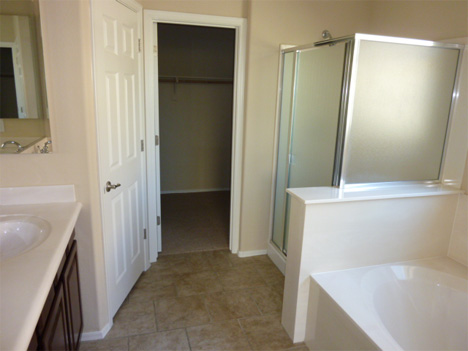
These are good, nice and wide, nice and bright. No distortion on the straight lines. A little bit of lens flare, but this ain’t Life magazine.

Here’s a huge benefit: Even with the flash on, the ZR1 is fast. Refresh time is maybe two seconds, essentially no delay at all. The auto-focus/auto-exposure systems need a little time to do their calculations, so it’s possible to rush the camera. But a wide lens has a huge depth of focus, so it’s hard to get into real trouble.

The movie is not so pleasing. The wide lens is great, but the AF/AE issue is much more serious on-the-fly. I don’t like house videos, anyway, but, if you plan to do them with the ZR1, you need to make sure you have a lot of light.

Here’s the video as recompressed by YouTube:

Not great. The original is better. You can see it by clicking “Play in Popup” in the links at the bottom of the post.

My one complaint with the camera, so far, is that it’s so tiny. I have big hands, so it’s taking some getting used to. But it’s wicked easy to get a lot of very good photos very quickly. And the 25mm lens is very, very wide for a point-and-shoot camera.

Further thoughts when I’ve had more time to play.

A look back at the last decade in real estate, what I got right, what I got wrong — and where things go from here

My friend Andrew Breese asked me to go through my own history, in light of both the real estate boom and the bust, detailing where I was wrong and where I was right.

Very big job, and it would be a long essay to write, so I’ve elected to go through it in video instead.

Click on the graphic below to watch the video.

What am I thankful for? That we surfed the payables and survived!

This time last year, I crashed my car, totaling it. We used the insurance money to pay off our most urgent bills, so we weren’t able to replace it for quite a while. We had an old Mercury that I used until its lack of a working air conditioner made that impossible. After that, I rented cars when I needed to show. For three solid months I escorted buyers in an amazingly awful rented Ford Taurus. It was literally painful to drive — backache-inducing — but it was only $500 a month to lease.

The last two quarters of 2008 and the first two quarters of 2009 were all action, no traction, so we lived by surfing the payables — paying nothing before it absolutely had to be paid, and paying nothing at all on bills that didn’t have to be paid — including the mortgage.

And that’s a story that had a deferred happy ending. We got hit with a foreclosure notice much earlier than I was expecting. Business had picked up markedly by then, so we redeemed our pawn ticket earlier than we absolutely had to. Even so, it’s not an experience I would commend to anyone.

We got hit with a couple of judgments over very late debts, but that’s just business. We’re current on everything current, and we’re chopping down the old-growth debts one-by-one. It’s not pleasing to me to be a dead-beat, but, while we might be late, we’ve never skated on a debt and we never will.

Meanwhile, the world is young again. In the first five months of 2009, we didn’t make enough to pay the pet food bills. In the last seven months, we made enough to get current on the mortgage, to get current on our current accounts, to retire a bunch of past accounts, to buy me a new laptop and (as of today) a new iMac, and to put a decent used car under my buyer’s butts.

Better still, we’ve been rolling on a six-figure pipeline for months — no hopes, no maybes, no blue-sky wishful thinking — and it’s been rolling along nicely. This Read more

Me and KJZZ: What’s up with the real estate market? Tune in Wednesday to hear my take on the topic

I will be on KJZZ radio (91.5 FM) in Phoenix tomorrow from 11:30 am to Noon. I’ll be talking about the state of the real estate market, the impact of the real estate tax credit and the flow of international buyers into the Phoenix market.

I think there will be an MP3 available, afterward, but you can stream KJZZ by clicking on this link.

 
Further notice: Click here for a link to the broadcast.

New cameras for the Bloodhounds: My take is that the Panasonic Lumix DMC-ZR1 offers a lot of bang for the buck

“If your car keys are with you, your camera should be with you.” That’s one of the mantras I preach at Realtors when I speak in public. The language of real estate is photography, and you cannot do your job properly if you can’t communicate what you’re seeing to your clients.

Having a camera along solves a multitude of dilemmas. I see a lot of houses for out of state buyers, so the web sites I build for them can provide invaluable details about candidate homes. But there are all kinds of other benefits to always having a camera with you when you’re out of the office: Documenting benefits and drawbacks of specific neighborhoods, capturing on-the-spot images of red flag issues before the inspector transmits his report, etc.

“But,” you may be be straining to expostulate, “my phone has a camera.” Believe me, I know. I see its output in the MLS way too often. Your phone has a bad camera, with a cheesy little lens — its focal length much too long for real estate — and a cheesy little image size. Someday phone cameras may be adequate for day-to-day real estate work, but that day is not today.

We have a Kodak Digital SLR for listings and other high-end work, but, until lately, we have each carried a Fujifilm Finepix E500 for everyday photos. This was a reasonable price/performance compromise when we got them. They’re light in weight and they’re powered by AA batteries, so there was never any threat of running out of juice. The lens is only 28mm at its widest, which is adequate but not ideal. But those cameras were workhorses. Cathleen and I both rolled them over, call it around 15,000 photos each over the past four years.

But all things come to an end. Cathy lost her Finepix recently, and mine is exhibiting the kind of noisome behavior that argues that it’s about to fail permanently.

Time to go shopping. I’ve been following the Panasonic Lumix line of point-and-shoot digital cameras since I first heard about them in a post by Jeff Turner, a long time ago. I got Read more

Further thoughts — mostly non-thoughts — on RPR

Reacting to John Rowles’ post, Jim Duncan has been talking about the RPR idea for years, and I read a little more about it today, having been tipped over the weekend by Tom Johnson. My take: Yawn.

RPR is not the generals fighting the last war, but the war before that. Apparently, the NAR still believes that the added value of real estate representation comes from hoarding data. RPR is their attempt to put a new fence around the data, having let the last set of barriers fall to Realtor.com and to IDX.

It’s twice funny to me, because not only is that war already well won — by the consumer — so is the true last war, the Battle of the Realty.bots. After all of this chatter, none of this shit has turned out to mean anything in real life.

I mean nothing. I’m convinced by now that no one who does not actually represent buyers and sellers has any clue about what is going on in the real estate market. We don’t search for listings — our clients do — and our position is stronger than ever. We post our listings wherever we can — and our position is stronger than ever.

I’m no friend to any restraint or restriction on trade, but buying or selling a home is a lot more complicated than it was four years ago. Our clients don’t need flashy web sites, they need agents who know how to navigate the shoals of the transaction.

RPR, MLS, VOW, IDX — all of this goes away when we do away with the co-broke. In the mean time, it’s deck chairs on the Titanic, at best, one more dipshit time-wasting “tool” to mask sales-call reluctance.

Notes for the grunts on the ground:

1. Motivated buyers and sellers will not go through a middleman in the early phases of their search. This is 1974-style thinking from the NAR.

2. Motivated buyers and sellers don’t care how they found you. They care about what they found: Do you know your shit? Can you deliver the product? Is your word any good?

3. Whether or not the information you Read more

How can a flat and dusty bumpkintopia like Texas outgrow a paradise on earth like California?

A clip from a fascinating City Journal article on the differences in taxes and services among the states and how that affects growth:

If California doesn’t want to be Texas, it must find a way to be a better California. The easy thing about being Texas is that the government has a great deal of control over the part of its package deal that attracts consumer-voters—it must merely keep taxes low. California, on the other hand, must deliver on the high benefits promised in its sales pitch. It won’t be enough for its state and local governments to spend a lot of money; they have to spend it efficiently and effectively.

The optimistic assessment is that things are going to get worse in California before they get better. The pessimistic assessment is that they’re going to get worse before they get much worse. As is often the case, hanging around with the pessimists is less fun but more instructive. The current recession has driven California’s state government into what amounts to a five-month budget cycle, according to Dan Walters of the Sacramento Bee. He estimates that the budget deal tortuously wrought in July should start falling apart in October, because it was predicated on pie-in-the-sky revenue estimates and because so many of its spending cuts are being challenged, often successfully, in the courts.

The recession will eventually end and California’s finances will improve, say the optimists. Given the state’s pervasive political bias against efficient and effective public services, however, the question is whether its finances will ever get truly well. States that have grown accustomed to thinking of the engine that drives their economies as an inexhaustible resource—whether it’s Michigan and the auto industry, New York and Wall Street, or California and the vision of the sunlit good life that used to attract new residents—find it tough to compete again for what they thought would be theirs forever, and to plan budgets for lean years that turn into lean decades. Instead, they invest their hopes in a deus ex machina that will rescue them from the hard choices they dread.

For California’s governmental-industrial complex, a Read more

David Harsanyi: “C’mon, admit it. Twitter is useless”

This is good writing, and the man takes it down in 500 words. From The Denver Post:

Twitter’s popularity and usefulness are a mystery to me. Pressed by personal, professional and cultural forces, I sporadically deploy short missives for fear of becoming one of those cantankerous technophobes who is too dense to recognize the miracle of letting “followers” know I hate raisins or that I loved the finale of “Mad Men.”

Now, not only am I expected to transmit this minutiae mere seconds after I think it, some 20-year-old in California has decreed that I must do it within the brevity of 140 characters. This need for conciseness, in fact, induces normally articulate friends of mine to write in Prince lyrics — recklessly using “2” and “4” and “U” as words.

To this point, I’ve found Twitter so aggressively worthless that I was forced to research exactly what I was missing. In the process, I stumbled across a useful New York Times tech column penned by David Pogue that clarified all. The headline read, “Twitter? It’s What You Make It.”

In summation, like your beloved pet rock, Twitter is useful only in your imagination.

Despite this, I can’t begin to add up how many times, as a member of the media, I’ve been instructed that I need to Twitter by people who have absolutely no clue what Twittering means. How Twitter helps journalism is yet to be determined.

But the deepest mystery of Twitter is why celebrities and elected officials take part. After all, we all know they can’t write their own lines.

Now, admittedly, Twitter can be entertaining on occasion, as it turns out that 140 characters offers a great chance to be misunderstood — and an even greater chance one will expose his inner troglodyte.

In these past few weeks alone, a clueless Colorado State Sen. Dave Schultheis tweeted, “Don’t for a second, think Obama wants what is best for U.S. He is flying the U.S. Plane right into the ground at full speed. Let’s Roll.” NFL running back Larry Johnson took time out from his busy day of sucking at his job to ridicule his coach Read more

When the cash-for-clunkers “logic” comes to the real estate market, it’s time for every homeowner with equity to cash in big

It’s cash-for-clunkers time in the real estate market.

Last week, in addition to extending the $8,000 first-time home-buyers tax credit for another six months, Congress added a new $6,500 tax-credit for move-up buyers.

The credit can be applied for homes selling for as much as $800,000, and the income limits exclude almost nobody.

You have to have lived in your home for more than five years out of the last eight, but that’s hardly an onerous restriction. And homeowners who have put down roots have equity.

Remember that capital gains on your primary residence are excluded from taxation if you have lived in your home for the past five years. But the way the government is spending money, that exclusion cannot last.

But, but, but… Your home isn’t worth what it was in December of 2005. That’s true, but it doesn’t change anything. The home that you can buy now was also selling for more four years ago.

Here’s the way things really shake out: If you have equity in your home, you can take that equity as a tax-free profit — for now. At the same time, you can snag the $6,500 tax credit. And you can do all of this at historic low interest rates.

If your house is worth $400,000 and you only paid $300,000 for it, you could reap a gain of $100,000 — which would save you thousands of dollars in taxes. If you wait for prices to go higher, you may wait a long time for a much smaller return. And the house you buy then will have appreciated, also.

I think we’re looking at a perfect storm for homeowners with equity: You can move now, take a tax-free gain, get a lot more house than you could have bought a few years ago, all financed with a low-interest mortgage. And then, next April, Uncle Sam will write you a big fat check for your trouble.

On second thought, this is less cash-for-clunkers than the taxpayer’s revenge…

 
Sell this idea! Feel free to share this idea with your clients and prospects — in your blog, by email, on the phone. This is big, and the Read more

Looking for peace and prosperity? Nothing gets good things done like a do-nothing federal government

This from my Arizona Republic real estate column:

The elections this past Tuesday were not a referendum on President Barrack Obama or his plans and policies. How do we know that? Because everyone associated with the Obama administration loudly insists that this cannot be so. They ought to know, right?

Senators and Representatives from states and districts that supported John McCain in the last election might have second thoughts, though, and this is very far from being a bad thing.

Americans insist to each other that they want a government that gets things done — except when they happen to be suffering under a government that is getting things done. If this election was not a referendum on Obama, it was a loud, angry shout about what the government has been doing lately.

The last time voters repudiated an over-ambitious president — the last six years of the Clinton administration — the nation experienced a period of tremendous growth and prosperity. The American people recoiled in horror from socialized medicine, and the resulting government — liberal president, conservative congress — was amazingly beneficial for the American people.

How? By getting nothing done, that’s how.

For free markets to work at their best, entrepreneurs need to be able to plan for the future. If they can surmise that prices and credit terms will not swing wildly over the next few years, they can plan their investments with a sense of security.

And if not? Not.

The Obama administration’s herky-jerky dance of currency inflation, stimulus programs, emergency bailouts and tax credits not only cannot stabilize the economy, they do exactly the opposite: They convince entrepreneurs that now is not a safe time to make plans for the future.

This goes for the real estate market, too. Buyers sit on the sidelines waiting for new tax credits. Sellers live in dread of future interest rate hikes. The Cap and Trade bill promises to complicate life for every homeowner.

So how might these elections have helped us all? It’s simple. If Senators and Representatives are afraid to act, nothing will change. And when nothing changes in Washington, everything changes, usually for the better, for everyone Read more

Homebound hounds: You’re going to have break those chains on your own this year in San Diego

I think it should be obvious by our lack of self-promotion, but we ended up not putting anything together for BloodhoundBlog Unchained in San Diego. I can’t speak for Brian, but I’ve been wall-to-wall with work for months, and I haven’t had time for anything else.

I’ll go through the PayPal records tonight to make sure everyone’s money is refunded.

Meanwhile: If you see any NAR grand poobahs, be sure to kick ’em in the shins for shifting all your November move-ups into December. Christmas may be good, Thanksgiving not so much…

Congress extends and expands the home-buyer’s tax credit

The Washington Post:

Under the housing program, people seeking to own a home for the first time in three years would receive an $8,000 tax credit if they sign a contract by April 30 and close on it by June 30. Current homeowners who are buying a new primary residence would be eligible for a $6,500 tax credit starting Dec. 1 if they owned their home for five consecutive years in the previous eight.

The timing is more lenient for military families who have been deployed overseas for 90 days or more in 2008 or 2009. They would have until April 30, 2011 to sign a contract.

But the measure limits the purchase price of the home to $800,000. It also imposes income caps so that people who make more than $125,000 annually and couples who make more than $225,000 would not be eligible for a refund. Anyone who collects the tax credit but sells their home within three years of buying it must return the refund.

The program is estimated to cost $10.8 billion.

The passage of the tax credit provision was a huge win for the real estate industry, which has been lobbying aggressively to extend and expand the program. They say the tax credit has helped boost sales and clear out a glut of lower-priced homes, especially foreclosures, and that ending it would be a blow to the housing market’s recovery.

But critics of the program, including some economists, say the program is far too expensive. They say that most people who used it would have bought homes anyway. They attribute the uptick in home sales in recent months more to low prices and record low interest rates.

Questions for the lenders: The tax credit for move-ups doesn’t commence until 12/01/09. What about first-timers? Can they be under contract now, or do they need to wait until after the end of the month.

More: Do I read this right? Can you “move up” after having rented for the last three years?

I hate this, of course. The real estate market can’t shake out if we won’t let it. But as listers of higher-end homes… Thus does the Read more

FannieRents: “Taxpayers are now going to own all these houses Fannie Mae should have unloaded. It’s going to cost a fortune.”

Yahoo News:

Can’t pay the mortgage? You still might be able to stay in your home. Government-controlled mortgage company Fannie Mae is going to give borrowers on the verge of foreclosure the option of renting their homes for a year.

The change announced Thursday could give a temporary break to thousands of homeowners, but critics question whether it will only add to the mushrooming losses at the company, which has received billions in taxpayer money.

The new “Deed for Lease” program will allow homeowners to transfer title to Fannie Mae and sign a one-year lease, with potential month-to-month extensions after that. It also helps save money because the lender does not need to complete the often lengthy and time-consuming foreclosure process.

The program helps “eliminate some of the uncertainty of foreclosure, keeps families and tenants in their homes during a transitional period, and helps to stabilize neighborhoods and communities,” Jay Ryan, a Fannie Mae vice president, said in a statement.

It also does less harm to the borrower’s credit record.

“It shows that you put your best effort to work out a solution,” said Gabe Del Rio, director of homeownership at Community HousingWorks of San Diego.

However, Mike Himes, director of homeownership services at NeighborWorks Sacramento, said the industry should push harder to modify loans at lower monthly payments. “The preferred option is allowing people to retain ownership,” he said.

Fannie Mae executives said the rental program is designed to help delinquent homeowners who don’t qualify for a loan modification, but still want to stay in their homes.

To qualify, homeowners have to live in the home as the primary residence and prove that they can afford the market rent, which will be established by the management company running the program. Rents are based on current market rates.

The plan is expected to be particularly attractive in places like Phoenix or Orange County, Calif., where homeowners are stuck paying large mortgage bills on properties that are now worth far less than they originally paid. At the same time, rents have been falling in those areas and homeowners may find they are paying far less to live in their home.

In Orange County, Read more