
The other week I had a warm call off of our web site from a potential seller. I took his information over the phone, then talked a little about objectives and time-frames. I told him we would get back to him later in the day. I comped the house and read the listings history, including a cancelled listing earlier this year. My gut feeling was that the seller was way over on price, especially for this market, but I hadn’t seen the home to know for sure (ahem).
I had to show, so Cathy did a drive-by on the home, and on the basis of that, she decided that we could not do the listing: Non-homogenous use of the land, over-improved and over-priced.
She called the seller to tell him we were taking a pass, and he was shocked. He didn’t quite come out and say so, but it was clear to Cathy that he had been under the impression that a Realtor would take just about any listing. In brutal language — that all Realtors are whores.
We are not. We turn down more listings than we take, and absolutely everything has to make sense before we will take a listing. We spend a lot of time and money to make our homes sell, and we lose a lot in reputation if they don’t. This is marketing, not peddling — and not pandering.
That leads to this: Joel Burslem reports on Zillow.com’s latest conquest: Prudential California/Nevada Realty. Joel offers this:
Does this mean the real estate industry is prepared to accept Zillow as the final authority on home values? I’m sure Greg over at BloodhoundBlog will have something to say about all of this.
In answer to the question, of course that is not what they’re doing at all. As with the daily newspaper, a citadel of fact except for the horoscope column, what they’re doing is pandering to the masses — whom they regard as morons, which opinion is betrayed by the pandering.
The truth is, I have no problem with Zillow.com if it is properly understood as an Automated Valuation Model, to be used with Read more

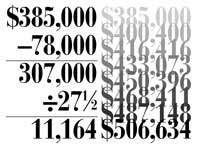 Dave and Sandy buy a four-plex apartment building as an investment. The purchase price is $385,000, of which $78,000 is attributable to the land. For tax purposes, they take a straight-line depreciation on the building over 27-1/2 years. Of course, the property actually appreciates in value by four percent a year. Assuming they make no property-improvements, when they sell the property seven years later, what are the tax consequences?
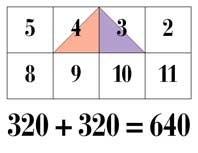 Starting at the northwest corner of Section 3, proceed in a southwesterly direction to the northeast corner of Section 8. From there proceed east 2 miles to the northeast corner of Section 10. Procced from there in a northwesterly direction to the point of origin. What is the total acreage of the parcel described?