
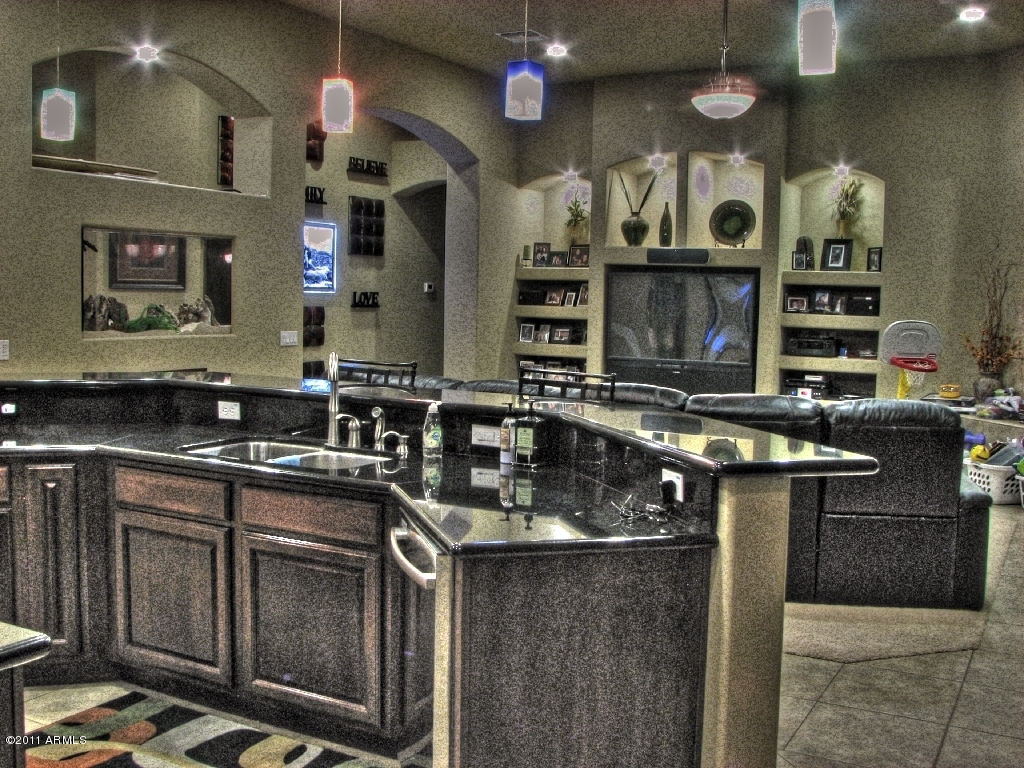
If this doesn’t sell the house, nothing will.
There’s always something to howl about.
If this doesn’t sell the house, nothing will.
Our friends at Zillow.com have figured out the secret to getting news coverage: Bad news:
Home values in the United States fell faster in the first quarter of 2011 than they have in any quarter since 2008, when the housing market experienced its worst performance, according to Zillow’s first quarter Real Estate Market Reports(1). The Zillow Home Value Index(2) fell 3 percent from the fourth quarter of 2010 to the first quarter of 2011, and declined 8.2 percent year-over-year to $169,600. Home values have fallen 29.5 percent since they peaked in June 2006.
Negative equity reached a new high mark with 28.4 percent of single-family homeowners with mortgages underwater at the end of the first quarter, up from 27 percent in the fourth quarter of 2010. A homeowner is in negative equity when they owe more on their mortgage than their home is worth.
Meanwhile, foreclosures(3) rose throughout the first quarter as banks unfroze moratoriums and allowed foreclosures to resume. Foreclosures had fallen in late 2010 due to the slew of moratoriums brought about by the “robo-signing” controversy. In March, one out of every 1,000 homes in the country was lost to foreclosure.
With substantial home value declines, as well as increasing negative equity and foreclosures, Zillow forecasts show it is unlikely that home values will reach a bottom in 2011. First quarter data has prompted Zillow to revise its forecast, now predicting a bottom in 2012, at the earliest.
“Home value declines are currently equal to those we experienced during the darkest days of the housing recession. With accelerating declines during the first quarter, it is unreasonable to expect home values to return to stability by the end of 2011,” said Zillow Chief Economist Dr. Stan Humphries. “We did expect substantial payback from the homebuyer tax credits, which buoyed the housing market last year, but underlying demand post-tax credit, as well as rising foreclosures and high negative equity rates, make it almost certain that we won’t see a bottom in home values until 2012 or later.”
My own take is that we are at or near the knee in the curve: While supplies of fire-sale-priced homes Read more
Is this home the right one for you and your family?
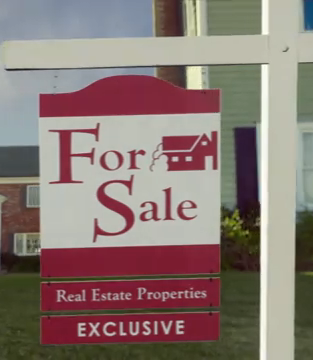
No, sorry. That’s an exclusive listing. Your trusty, ever-faithful Coldwell Banker broker won’t get paid if you buy that house.
So is this the perfect home for you?
Oh, no! This home has serious systemic defects, the worst of which is… it’s a fizzbo… Not only will there be no doughnuts at the closing table, your trusty, ever-faithful Coldwell Banker broker won’t get paid if you buy that house.
But this — this is the ideal home for you and your family:
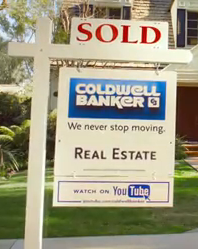
Why? Because your trusty, ever-faithful Coldwell Banker broker will not only get paid, she’ll get paid double, once for suckering the seller into listing with Coldwell Banker and once more for suckering you into a dual agency.
Here’s the full clip:
When you say “yeah” you are conceding my argument. When you say “but” you are contradicting yourself. If this commercial is not a sleazy hustle, what is it?
…a certain theme in Century 21’s latest attempt to make consumers care about a real estate brand?

Considering that the average age of a real estate agent is like 73, the women in these ads should look like this:

Blanche is even wearing a gold jacket!
Memo to Bev Thorne, CMO of C21: If you are going to cougar route, go full cougar. Why beat around the bush? :

I nailed down a house this morning at 6:50 am. It’s a hard dance to get the right house at the right price, but the world of email permits miracles to happen at any hour of the day or night.
We had a totally rockin’ April, more than three times our monthly nut. But the first check in April didn’t hit the bank until the 15th of the month, and, until this morning, we had zero dollars on the board for May. Even so, I told Cathleen that April 15th was our last day of poverty. We’ll see if that’s a prognostication I can defend.
Here’s a goal-getting calendar for May.
This is a simple procedure: Set goals, attain them, record your progress, do better over time, repeat month-by-month. It works. So get on it.
It’s time for me to apologize. Some time back I introduced an idea – a set of ideas really – called the POPs Program, which I always meant to get back to it, but haven’t until today. So, to those of you who faithfully read my articles and were excited to learn more about the POPs Program, I am sorry. I hope all four of you will forgive me…
In that Introduction, I discussed the autopilot that so often ends up running a great deal of our lives, and how diligent we must be to prevent it. But it’s not easy, especially if you are a real estate agent! One of the most common complaints I hear from agents is there’s not enough time in the day to get everything done. Sound familiar? Well be careful because that’s the beginning; that’s when we first begin to reach for the autopilot button. Not on anything important – at least, not yet. We turn it on to handle little things in our schedule; we allow it to help us move through a very busy week. But tuning out is a slippery slope and eventually leads to the two great roadblocks of success: Guilt and Fear… and it all starts with Time.
Temporal Awareness is the great gift, and great curse, of sentient beings. Unlike any other organism on this planet, we are aware of time as a line; we are cognizant of a past and a future. This no doubt has served us well. We know how to delay gratification, plan ahead and save. We are adept at learning from mistakes, recognizing patterns and creating the possibility of a more successful future based on experiences of the past. BUT (and you just knew there was a big “but” coming), this linear understanding of time is the seed of our undoing as well.
To understand this better, go with me on a quick, imaginary trip to the Serengeti plains of Africa where a tiger is chasing a gazelle… presumably for lunch. The entire chase lasts less than a minute before both animals are exhausted and, in our happy little trip, the gazelle has escaped. Do you know what happens next? Nothing! The tiger lays down to rest; Read more

Commercial Real Estate Finance Expert
Structured Debt and Equity
Licensed Real Estate Broker in AL, CA, and FL
Monday, I talked about how real estate is better described as a store of value rather than an investment, referencing the work Reason’s Anthony Randazzo published. Randazzo really hit it out of the park because he showed, without a doubt, how the residential real estate bubble started right after 1992. Look at the second chart (Case-Shiller Real Housing Price Index). That chart shows the adjusted for inflation index. It looks like an EKG after a jolt from defibrillator paddles. Every curious person would want to know what those defibrillator paddles were.:
Only once the so-called 1992 Government-Sponsored Enterprise (GSE) Safety and Soundness Act opened up the floodgates of federal subsidies, later to be caffeinated by the Federal Reserve’s loose monetary policy in the early 2000s, did prices double nationally.
ZAP!!! The 1992 Government-Sponsored Enterprise (GSE) Safety and Soundness Act which turned out to be an oxymoron.
One commenter didn’t buy the results of the EKG and said:
Seems to me that America has had a succession of bubbles, market manipulations and public speculations since the mid 80s. Gold/Silver in the mid 80s, the Saving & Loan scams later, then the tech stock mania, then the real estate bubble and now we’re seeing gold/silver mania again as well as two recent bouts of crude oil speculation.
And these things were caused by activist government planning? No, these things were caused by BIG, BIG money jumping from place to place and “making the market”.
I asked a leading question:
What makes it “jump”?
I should have pointed out that there was a commodities bubble in the late 70s (remember the odd and even days at the pump?) but, let’s add that 70’s commodities bubble, to the many asset bubbles cited by the commenter, and ask “Is that normal?” and, if it isn’t (by the way, it isn’t normal), we must wonder, did anything happen in the 1970’s which would cause money to move quickly in and out of asset classes? Isn’t there some asset standard to which our dollar could be pegged?
The answer is like a bar of gold, hidden Read more
Commercial Real Estate Finance Expert
Structured Debt and Equity
Licensed Real Estate Broker in AL, CA, and FL
Debra and I had the good fortune to met Anthony Randazzo at a Reason Foundation dinner last week. Mr. Randazzo published an article today, about real estate as a “store of value” (which was consistent with what we’ve been talking about here on BloodhoundBlog).
Few people will dispute that more homeowners adds “social value” to communities. Greg Swann articulated that nicely here:
The essence of our freedom is the free ownership of the land, and yet everywhere we turn, private property is subjected to one law after another, and everything that is not forbidden is compulsory instead.
This is a grievous error. The men who become Brownshirts or Klansmen or Khmer Rouge — the men who make up murderous mobs — are men without land. It is the husbandry of the land — each man to his own parcel — that most makes husbands of us, that sweeps away our willingness to live as brigands or rapists or thugs.
By robbing the private ownership of the land of its meaning, the state is, by increments, robbing its citizens of their humanity. No one burns down his own home, nor his neighbor’s home. But when the time comes that we all seem to own our homes only by sufferance, none of us will have anything left to defend.
What Greg was arguing against was an activist government, abusing eminent domain laws. I was happy to read that locally, the brigands disguised as National City, CA Councilmen were defeated last week but the war in defense of private property rights will be a long campaign.
Mr Randazzo’s article however, demonstrates how that “social value” (op. cit.) can be distorted when the planners keep planning:
When looking at housing this way, the “ownership society” lauded by President Bush in the early 2000s, sounds like a good idea. Especially when considering the social values associated with homeownership, like being a good neighbor and having a stake in nuturing a community. However, while owning a home is rarely a bad thing, it might not be the great investment our Read more
Commercial Real Estate Finance Expert
Structured Debt and Equity
Licensed Real Estate Broker in AL, CA, and FL
Ever wonder about the relationship between gold and real estate?
Jim Klein got me to thinking about a “store of wealth”, when I postulated that there is no gold bubble:
I think people can get snookered into thinking it’s a great “investment.” It’s protection, it’s barter; it’s a store of wealth. To me, that’s not what “investment” means, which is usually about income. I believe that in actual inflation periods, gold tends to appreciate on the low side, particularly when compared with many other assets. It does much better /anticipating/ inflation, as now.
I remembered hearing that term before, over on Seeking Alpha:
Gold and Real Estate have historically been the two ways to store real value as they are as real assets as you get. So what happens when the value of one real asset is artificially manipulated? We all know by now what caused the bubble in real estate, but, at the height of the bubble it was unknown to the market that it was a bubble on the verge of bursting
Real estate does have income-producing value though, as Sean Purcell pointed out to us years ago. Also, the median-priced home is larger today than it was 40 years ago, because of change in retail demand. Still, for fun, let’s compare the median price of a single-family home, in August, 1971 ($25,300) to the price of a single-family home, in February, 2011 ($202,100), in ounces of gold:
On August 1, 1971, the price of gold was pegged at $35/oz so it would have taken 722 ounces of gold to purchase a median-priced, single-family home. Two weeks later, The United States terminated its participation in The Bretton Woods Agreement, creating a fiat currency.
At the end of February, 2011, you might have paid $1,400/oz for gold. You could purchase a median-priced, single family home then for 144 ounces of gold, about one-fifth the cost (in gold), from 1971.
What I’m missing here is the net operating income you would have derived from that single-family home, over the 40-year period. I’d have to know Read more
I’ve loved Jott.com since it was introduced. I use it every day — mainly to send reminders to myself, but also as my primary interface into Google Calendar. No more. Jott ends five years of gamely trying to get people to understand its value on May 3rd.
A lesser cause for mourning, Cisco flipped the switch on the Flip video camera line today. Frankly, I’ve been waiting for this for a while. The best idea Flip had was easy integration into YouTube — a feature your phone has by now, I should expect. Meanwhile, we switched almost all of our video to our Panasonic Lumix point-and-shoot cameras as soon as we got them.
The first BloodhoundBlog Unchained was clip-documented via Flip cameras, so I am not indifferent to see it go. Just to put extra icing on the Flip’s farewell cupcake, Cisco paid — wait for it — $590 million for the company in 2009.
Ultimately, I won’t weep, though. I can’t remember the last time we used the Flip for anything. Jott, on the other hand, is going to leave a big hole in my workday.
Greg likes Michelle Pfeifer. I can dig it.
This is more my speed. Look, there’s always – always a justification to surrender, give up liberty, give up more. There’s always – always some call to pretend that everything is OK.
And we surrender in our selves first, because we become addicted to things. We become addicted to stuff. That stuff owns us.
Then we become addicted to making nice. Because if we’re not nice, someone might not let us have stuff.
Screw that. Take back your dignity and only tolerate excellence.
Hard to do.
Here’s a fun little exercise for your brain:
Suppose I sneak up behind you, throw a burlap bag over your head, tie you up and then lock you in my basement. Would you regard that as a crime?
I don’t mean just a call-the-cops crime or a phone-your-lawyer crime. I don’t mean simply a violation of some arcane statute law. Even if we were on a desert island, with no written law of any sort, would you still regard my actions as a crime against your person and your liberty?
I know I’m asking you to think for yourself, all by your lonesome, with no hints or signals from the mob and no helpful pre-printed guide to clue you in to the “right” answers. Poor you. So I’ll cut you a break: You can feel free to quit this tiring exercise at the very first instance that you are able to truthfully answer, “No, I would not regard that as a crime.”
So let’s do another one:
Instead of locking you in the basement, let’s say I let you work all day in the sunshine and fresh air, tilling and tending to my fields? You are still my prisoner, but you’re not tied up or locked up. Would you still regard that as a crime?
And, hey, we all know that forcing people to work for free is slavery, so what if I pay you a nice wage for your efforts? You’re still my prisoner, and you still have to do the work I tell you to do, but now you’re being paid handsomely. Would you regard even that little trifle as a crime?
So how about this? Suppose I set you free? Manumission! Just like you pictured it! There’s only one catch. Whenever you buy or sell food, you have to do it through me, like a feudal serf. There are other people who could trade with you, perhaps leaving you with quite a bit more profit than I will, but you are forbidden from doing business with any of those people. You must go through me, paying my price. Would you regard that as a crime?
Clarify Read more
Could somebody please get these retards a job they can handle?
Hey, NAR grand poohbahs, wanna look smart? Just stand next to FannieMae.
This post is grown from a comment left by Brian Summerfield, editor of Realtor magazine. Before I begin, I want to commend Brian for daring to show up here to debate this topic. I think he’s wrong, but the man has more guts than the people who pay him.
Now then: I said:
Doesn’t mean that banksters would not have come up with other flavors of larceny.
To which Brian replied:
Greg, you toss this off as an afterthought, but I see it as a key point. You say the sine qua non of the Great Recession was NAR, but it was in fact systemic flaws in the global financial system. Without collateralized debt obligations or credit default swaps, there would have been no Great Recession. And NAR had nothing, nothing, to do with the creation of those “innovations” of finance.
As you, the reader, may have noted, there are people writing and commenting here who are more than unusually interested in philosophy — as a map of the universe and as a discipline of the mind. Brian’s argument turns on what normal people call “hypotheticals.” Jim Klein calls them contra-factuals, where I am apt to rave on about subjunctivity. In all three cases, we are talking about the same thing: We are making what we hope are logical claims about imaginary worlds, worlds not in evidence.
The universe outside our minds has an independent and prior existence, and the objects and events that comprise that universe are real and factual existents. When I make a statement about the real world — the universe of real things — my statement is subject to independent verification. The object I claim to see is either present or it is absent. The event I claim is happening is either occurring or it is not. Disputes about statements like these are possible only to the insane or to philosophy professors — but I repeat myself.
So: These things really happened:
1. The National Association of Realtors either wrote or lobbied for a great host of Rotarian Socialist laws devised to churn the residential real estate market for the benefit of real estate brokers Read more
I threw down the gauntlet — and not for the first time:
It was the NAR that lobbied for each law and rule change that resulted in the housing boom, the sub-prime lending catastrophe, the wanton bundling of fraudulent loans, the on-going subsidization of the secondary mortgage market, etc.
The villain behind all the villains in the collapse of the American economy is the National Association of Realtors.
We know they’re spying on us. And we know their PR pimp demonstrated that he got bilked when he paid for his law degree, so poorly does he argue.
So: Why doesn’t the brave National Association of Realtors — the largest, richest, most-powerful Rotarian Socialist corporate-welfare-tit-sucking political pressure group in the land — why won’t it stand up on its hind legs and defend itself?
For a first reason: Because it can’t. Better than any of us, the grand poohbah blood-sucking vampires of the NAR know beyond all room for doubt that it was their legislative initiatives that were the seeds, stems, stalks, branches, trees and forests that caused the housing boom, the housing bust and the Great Recession.
And for a second reason: Because they are actively plotting to do still more, still worse damage to the American economy. They will not stop sucking until they have sucked the body politic dry.
How do we know all of this true? Cum taces, clamas. When you say nothing, you shout.
They don’t defend themselves because they can’t. They know they are criminals. They pray, every sleepless night, that you do not know it.
In fact, the silence of your putative “leaders” does not prove me right. That would require an argument — an argument only I am happy to make. But the fact that the National Association of Realtors does not challenge my arguments is potent evidence that they themselves believe I am correct.
Are you waiting for the NAR to argue that someone else is responsible for the Great Recession — for the ruin of your own finances and for the devastation to be delivered to your children and grandchildren?
Don’t hold your breath. They know they’re at fault. And so do you.


