BloodhoundBlog

There’s always something to howl about.

Archives (page 86 of 372)

So Simple Even a Realtor Can Do It? – Fishing In Wells

“So simple even a Realtor can do it.”

Our old friend Russell Shaw wrote a post recently in which he made use of that quote. It comes from the well known Gary Keller book, Millionaire Real Estate Agent. Though I’ve not read it, that quote alone got it on my to-do list, if only to see what other nuggets might be lurking within.

I understand the sentiment. Even if we assume the expertise and knowledge it takes to produce results for buyers and sellers, without the ability to get yourself in front of folks who have the option of tellin’ you to stick it, all your skills will go unused. The best fisherman in the world won’t catch fish #1 casting his line down a well. He tends to prefer plyin’ his talents where the fish are likely to congregate. Go figure.

We humans tend to pull the wool over our own eyes. Having a plausible, even credible sounding reason for consistent abject failure is key to maintaining our perfect record of failing for very solid reasons. You know, we may fail, but it’s never due to anything we’ve done or failed to do, right? Right.

Beginning last week I began knockin’ down dominoes launching my company’s new infrastructure/marketing/return to San Diego. I ‘left’ SD almost seven years ago, as income property there was for those who either didn’t know what they were doing, were unaware of outa town options, had simply given up — or all of the above. My assessment back then, and until recently, was that it was akin to fishing in a well — it might be relaxing, but you were still gonna be eatin’ beans for dinner.

One of the dominoes knocked down this Monday was reintroducing myself to the local Board of Realtors (gulp) and the MLS. I was pleasantly surprised to learn they’ve followed Phoenix’s lead and become Mac friendly. Also, don’t know when this started, but one must now click a fob to access the MLS now. I joined again cuz I needed other fishermen to know where my fish can be found. Read more

What caused the housing crisis? Perverse government incentives.

Form an academic paper by George Mason University Economics Professor Russell Roberts:

Beginning in the mid-1990s, home prices in many American cities began a decade-long climb that proved to be an irresistible opportunity for investors. Along the way, a lot of people made a great deal of money. But by the end of the first decade of the twenty- first century, too many of these investments turned out to be much riskier than many people had thought. Homeowners lost their houses, financial institutions imploded, and the entire financial system was in turmoil.

How did this happen? Whose fault was it? Some blame capitalism for being inherently unstable. Some blame Wall Street for its greed, hubris, and stupidity. But greed, hubris, and stupidity are always with us. What changed in recent years that created such a destructive set of decisions that culminated in the collapse of the housing market and the financial system?

In this paper, I argue that public-policy decisions have perverted the incentives that naturally create stability in financial markets and the market for housing. Over the last three decades, government policy has coddled creditors, reducing the risk they face from financing bad investments. Not surprisingly, this encouraged risky investments financed by borrowed money. The increasing use of debt mixed with housing policy, monetary policy, and tax policy crippled the housing market and the financial sector. Wall Street is not blameless in this debacle. It lobbied for the policy decisions that created the mess.

In the United States we like to believe we are a capitalist society based on individual responsibility. But we are what we do. Not what we say we are. Not what we wish to be. But what we do. And what we do in the United States is make it easy to gamble with other people’s money—particularly borrowed money—by making sure that almost everybody who makes bad loans gets his money back anyway. The financial crisis of 2008 was a natural result of these perverse incentives. We must return to the natural incentives of profit and loss if we want to prevent future crises.

Is This Normal? (What Seattle Real Estate Agents Earn)

We’ve spent plenty of time trying to figure out what’s fair to pay Redfin agents. As part of that exercise, we analyzed the gross commissions for all Seattle-area (King County, to be precise) agents who closed at least one transaction over the past year (May 12, 2009 to May 11, 2010). The data surprised us, so much so that we thought we’d ask this community if we’re making any obvious mistakes.

We sorted the agents by gross commission, assigning percentiles to each. When we didn’t know the commission on a deal, we assumed it was high: 3% for each side.

Agents at the 50th percentile of pay earned $29,820 in gross commissions. Agents at the 75th percentile earned $75,018. You don’t hit $100K in commissions until the 82nd percentile. Then we graphed the data, showing the gross commissions on the vertical axis, and the percentile of the agent earning those gross commissions on the horizontal axis. The result was a hockey stick:

But then we reasoned that a lot of part-timers are closing one or two deals on the side while working another job; so we excluded all the folks who earned less than $25K in gross commissions. This shifted the graph to the right a bit, but otherwise we still saw a very small number of agents earning a huge proportion of the total commissions in a market:

Then we asked ourselves how much money a good agent — say, someone earning $100,000 in gross commissions — has to shell out in costs each year:

Type of Expense Traditional Agent, Annual Costs
Brokerage fee $10,000
Health insurance $10,500
Marketing $10,000
Social Security, Medicare Taxes $6,500
Transportation $3,600
Cell service $1,200
Equipment $1,000
Dues, education $783
IT $1,000
Total $44,583

All told, the data left us scratching our heads. In a fairly wealthy market where sales volume has been increasing, a good agent — someone among the top 15% of his peers — is probably netting less than $60,000 per year. Does that sound right?

The greatest risk of resurrgent statism is that we will forsake the unalienable right to the pursuit of happiness…

Arthur C. Brooks of the American Enterprise Institute in The Washington Post:

The new statism in America, made possible by years of drift and accelerated by the panic over the economic crisis, threatens to make us permanently poorer. But that is not the greatest danger. The real risk is that in the new culture war, we will forsake the third unalienable right set out in our Declaration of Independence: the pursuit of happiness.

Free enterprise brings happiness; redistribution does not. The reason is that only free enterprise brings earned success.

Earned success involves the ability to create value honestly — not by inheriting a fortune, not by picking up a welfare check. It doesn’t mean making money in and of itself. Earned success is the creation of value in our lives or in the lives of others. Earned success is the stuff of entrepreneurs who seek value through innovation, hard work and passion. Earned success is what parents feel when their children do wonderful things, what social innovators feel when they change lives, what artists feel when they create something of beauty.

Money is not the same as earned success but is rather a symbol, important not for what it can buy but for what it says about how people are contributing and what kind of difference they are making. Money corresponds to happiness only through earned success.

Not surprisingly, unearned money — while it may help alleviate suffering — carries with it no personal satisfaction. Studies of lottery winners, for instance, show that after a brief period of increased happiness, their moods darken as they no longer derive the same enjoyment from the simple pleasures in life, and as the glow of buying things wears off.

The same results emerge with other kinds of unearned income — welfare payments, for example. According to the University of Michigan’s 2001 Panel Study of Income Dynamics, going on the welfare rolls increases by 16 percent the likelihood of a person saying that she or he has felt inconsolably sad over the past month. Of course, the misery of welfare recipients probably goes well beyond the check itself. Nonetheless, studies Read more

Free Market Solutions To Government- Hatched Problems

Got oil in your water?  How’s that government supervised clean up working out for you?  A few weeks ago, I said:

This may be a hard pill for government groupies to swallow but the response to the Exxon Valdez oil spill (more government regulations and a limit on liability) is what caused this disaster.  Regulations offer a false sense of security.  Moreover, when the State manages risk for private industry, private industry will take as much risk as they are legally permitted.  It happened in the housing market and now its happening to our environment.  This is what free market supporters call “moral hazard” which is a fancy way of saying “with reward comes responsibility”.

Still, the chocolate milk pumps into the sea at a rate of 150 gallons per minute.  In my conclusion I said the free market might develop some new technology to clean up oil spills:

The solution?  Government should do one of its two legitimate functions and adjudicate the claims.  The judgments will properly quantify the risk associated with an oil spill so that the industry can better measure that risk.  Maybe all offshore drilling will cease.  Maybe new technology will be developed to bring the oil through the water safely.  Maybe reinsurance products will be developed to diversify the risk.  …but we’ll never know.  We’ll never know because Senator Sara and the rest of the superheroes in Washington are certain that they can corral what Adam Smith called “The Invisible Hand”

and…perhaps the private sector, financially backed by the most unlikely of entrepreneurs, did:

Motivated by the Exxon-Valdez oil spill, Kevin Costner began assembling a team of scientists to construct a machine that could clean up massive spills. A decade and a half later, that technology might now be put to use off the coast of Louisiana.

A massive oil slick creeping to the coast, vulnerable Louisiana wildlife just miles from its path, and Kevin Costner mingling on the lakefront. These are unusual times, and the Hollywood star is introducing Read more

Everything the ancient Greeks warned us about democracy has come true in modern Greece — and right here in River City as well

Mark Steyn in Macleans:

Traditionally, a bank is a means by which old people with capital lend to young people with ideas. But the advanced democracies with their mountains of sovereign debt are in effect old people who’ve blown through their capital and are all out of ideas looking for young people flush enough to bail them out. And the idea that it might be time for the spendthrift geezers to change their ways butts up against their indestructible moral vanity. Last year, President Sarkozy said that the G20 summit provided “a once-in-a-lifetime opportunity to give capitalism a conscience.” European capitalism may have a conscience. It’s not clear it has a pulse. And, actually, when you’re burning Greek bank clerks to death in defence of your benefits, your “conscience” isn’t much in evidence, either.

Let us take it as read that Greece is an outlier. As waggish officials in Brussels and Strasbourg will tell you, it only snuck into the EU due to some sort of clerical error. It’s a cesspit of sloth and corruption even by Mediterranean standards. On my last brief visit, Athens was a visibly decrepit dump: a town with a handful of splendid ancient ruins surrounded by a multitude of hideous graffiti-covered contemporary ruins. If you were going to cut one “advanced” social democracy loose and watch it plunge into the abyss pour encourager les autres, it would be hard to devise a better candidate than Greece.

And yet and yet . . . riot-wracked Athens isn’t that much of an outlier. Greece’s 2010 budget deficit is 12.2 per cent of GDP; Ireland’s is 14.7. Greece’s debt is 125 per cent of GDP; Italy’s is 117 per cent. Greece’s 65-plus population will increase from 18 per cent in 2005 to 25 per cent in 2030; Spain’s will increase from 17 per cent to 25 per cent. As lazy, feckless, squalid, corrupt and violent as Greece undoubtedly is, it’s not that untypical. It’s where the rest of Europe’s headed, and Japan and North America shortly thereafter. About half the global economy is living beyond not only its means but its diminished number of children’s means.

Instead Read more

The Next bubble to burst: Government!

I’ve been a bit slow on this one.  I have been wondering what sector of the economy was going to over inflate and burst next.  The answer has been right in front of me the whole time but the reason I did not see it very clearly is because I was wondering what part of the private economy would burst next.  Sure, I knew the government was in trouble, but I did not think of it as a “bubble”, like real estate or the dot.com era.

A simple headline today put the perfect perspective out there for me to get it.  If I apply “bubble economics” to the government sector, it is perfectly clear.

The economic collapse of Greece is a wake-up call. The unsustainable combination of a bloated public bureaucracy, high deficit spending and unfunded pension obligations busted Greece’s government bubble. Now the birthplace of modern democracy is on the brink of becoming a failed state.

The Bank of England recently warned that the U.S. is on the road to the same fiscal failure as Greece, and the Obama administration’s insistence on massive public spending and increasing deficits is the reason.

At this rate, the U.S. government will be the next economic bubble to burst. We’ve seen similar downturns: the information technology bubble in 2000, housing in 2007 and Wall Street in 2008. If unchecked, America’s government bubble will depress our economy with higher interest rates and defaulting state and local governments.

Politicians Aren’t Businessmen

Federal spending alone this year accounts for 25% of our nation’s gross domestic product. If you add state and local spending, the number is closer to 50%. No economy can thrive when nearly half of all economic output is directed by politicians rather than entrepreneurs and small businesses.

After big government spending, government employee unions pose a serious threat to America’s fiscal health. Over the past 30 years, union membership has declined significantly, from 23% of all workers in 1980 to about 12% today. But the percentage of union members working for government has Read more

The Guy With the Website

Since October 2009 – roughly 8 months ago – my website – www.chetson.com – has brought in just over $200,000 in business. Quite a lot of this business I’ve referred out. But in referring it out, I’ve made clear to the receiving lawyers that I’d like to learn from them, would approach them with questions from time to time, have them review briefs etc. I try not to be presumptuous or demanding. Right now I’m in the business of learning the law and building a reputation as a smart, helpful, and good criminal lawyer.

This has worked out well, to the extent that by the time the year’s over I’ll probably have had at least two jury trials. I’ve gotten to interact with some of the top lawyers in town. One guy – a fantastic lawyer – has taken to calling me, half-jokingly, a “cash cow” and whenever I show up at his door, unless he’s with a client, he’s happy to help. I’ve gotten a ton more experience than I ever could had I simply been an associate in a law firm. By operating as my own law firm, and by bringing things to the table, I’ve been able to present myself more as a “peer” with lawyers whom I respect.

To be honest, I could make a decent living by just doing the web work for other lawyers, but my goal has always been to become a great lawyer, and so this doesn’t interest me much.

Here’s how I’ve done it: focusing relentlessly on clear and cogent content, taking advantage of all the tools that Google – Google Local/Place, Google AdWords (for a time), Google Analytics to measure, and Google Webmaster – has to offer to promote my business, by building links to the website, and by offering a good service that people are happy to write reviews about following the conclusion of their cases.

By trading on things I already know – how to build a promote a website that will bring in business – I’ve been able to make headway quickly in learning Read more

What does it take to be a successful real estate agent?

Being relatively new to the real estate industry (coming from a military background, followed by some time in the NYC finance sector), I came into it wide-eyed, green and full of expectations, realistic or not.  I believed that in real estate, like most facets of life, you could succeed through hard work, perseverance and a healthy dose of common sense.  Now I’m beginning to question if I had any of that right.

Intelligence.  An asset that will guarantee your success regardless of what you do.  But is that applicable in real estate?  I’m not saying I’m the smartest person in the room (even when I’m alone), but I have met some real estate ‘professionals’ who really push this issue to the brink.  And I’m talking about top-producing agents!  Just a few days ago, I overheard a conversation where an agent, who just got a listing for over $2.4M, asked another if he knew what ‘TMK’ meant. Really, I am not making it up.

Hard work.  Sure, most successful agents are hardworking.  But in it of itself, hard work does not guarantee even the slightest bit of measurable success in this industry.  Sure, having systems in place to ensure efficiency should make the work load a bit easier to handle, but I’m finding more and more than even when you do all the things that the experts say you should be doing, success is not necessarily within reach (at times it seems to be the opposite, actually).

Professional appearance.  Well, this one may be more touchy to me since I live in a tropical area where casual attire is the rule of the day. But really, how is it that people look like they just rolled out bed, slapped on whatever dirty clothes were on the floor, slipped some beach flip flops and land multi-million dollar deals?  Sure, I get it, ‘Aloha Friday’, but that could mean a number of things (i.e. nice shorts with a tommy bahama shirt) besides just being plain sloppy.

Knowledge of the market.  I can’t wrap my head around this one as I thought for sure this would be one area Read more

Rand Paul’s take on private property rights is correct — and daring to tell unfamiliar, uncomfortable truths to voters is laudable.

Well.

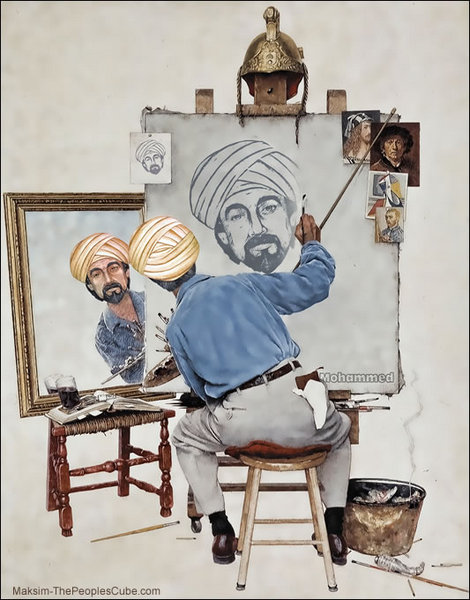
I’m thinking that “Everybody Draw Mohammed Day” has brought us a nearly universal display of cowardice from the RE.net. If I am mistaken in this, I will happily amend my error with a link and a courtly bow. But I expect there is even more room for quivering, quibbling, cowering, caviling cowardice on this fine and perfect day.

Like this: The position Kentucky senatorial candidate Rand Paul took on property rights yesterday is correct — not just as regards property rights, but as an expression of the errors we need to correct in the body politic if we are to reemerge, eventually, as something resembling a civilized society.

The left is attempting to smear Paul as a racist for insisting that private property owners themselves have the moral authority to be racists, even if Paul and virtually everyone else find that position to be morally-repugnant. This Two-Minutes-Hate campaign doesn’t seem like a winning strategy to me, in the age of the internet. The left will have no trouble finding reasons to hate Rand Paul, but his own tea party admirers may find in his principled arguments even more cause to admire him.

But mainstream Republicans are in full-reverse mode, backing away from Paul as quickly as they can. This seems to me to be a mistake. The tea party movement is an artifact of the age of the internet. At the least, tea partiers check up on the things they are told by the mainstream media. And it seems plausible to me that many of those folks are aware that the United States has been pursuing the wrong policies — as a matter of philosophy — since the end of the nineteenth century, at least. Anyone seeking greater human liberty has to regard this present moment as an incredible opportunity to get ordinary Americans thinking about ideas they might never have considered before. For Republicans to race away from the actual philosophy of liberty seems to me to be hugely stupid.

So let’s start here: Racism is by far the stupidest and most morally-repugnant form of collectivism. This is completely obvious to any thoughtful individualist, Read more

“Jihad, Las Vegas!”

A Ramblin’ Gamblin’ Willie story

“C’mon, Sahib,” the Cabdriver said. “Let’s get rollin’.”

Sahib said, “Again I must remind you that my name is not Sahib. And also I must ask you again to wait. Even now I am about to win the jackpot.”

Sahib was sitting at a penny slot machine in the casino of the Stratosphere, in fun-filled-Las-Vegas-Nevada. Max coins, no less, a real player.

“Jeesh!” said the Cabdriver. “Your jackpot’s a hundred freakin’ bucks!”

“No, you are very much mistaken. The colossal-grand-jackpot on this machine is ten thousand American coins.”

“It’s a freakin’ penny slot! Ten thousand pennies is a hundred bucks!”

“Even so, I have every confidence that I must certainly hit the jackpot. By now I have eliminated nearly every other possibility.”

“No memory.” I said that. I was at the bank of machines behind theirs, playing video poker.

Sahib said, “I regret that I must ask you to repeat yourself.”

“No memory. ‘The wheel has no memory.’ Blaise Pascal. Inventor of roulette. Also of probability theory. There’s a random number generator inside your machine. Sixty times a second it spits out a new random number. Doesn’t remember the last one. Doesn’t care about the next one. When you hit the max coins button, you get the current number, and nothing you did before, nothing you’ll do later will change that number.”

The Cabdriver leaned over to murmur in my ear. “Freakin’ fascinating,” he grumbled, “but I’ve got to get this clown out of here!”

“In addition,” Sahib continued, “a young woman has promised to bring me another one of these very appealing citrus beverages.”

“Margarita,” I said.

“Again I must beg your indulgence in repeating yourself.”

“It’s a Margarita. Lime juice and tequila, plus Triple Sec or Cointreau or Grand Marnier.”

Sahib was aghast. “Promise me, sir, that I am not consuming alcoholic spirits!”

“Not here. Not by half. Here they make ’em with lime-ade and monkey-puke.”

“Thanks be to Allah,” he sighed. “I am very much enjoying my monkey-puke.”

The Cabdriver was seething. “Sahib! Hadn’t we better go about assembling your freakin’ bomb?!”

To the Cabdriver I said, very quietly, “This is Las Vegas and it’s all about fun, but since nine-eleven I Read more

How the bank robbed Bonnie and Clyde

A Ramblin’ Gamblin’ Willie story

“Stick ’em up!” said Clyde. I swear that’s what he said.

My first bank robbery. I was right behind Clyde in line, so I saw it all. It wasn’t what I expected…

Behind the teller’s cage was Hello-my-name-is-Annabelle, the world’s most unflappable teller. She said: “Do you have an account with this bank?”

“Huh?! Lady, this is a stick up!” Clyde had one of those cheap little .25 caliber pistols, the kind that are guaranteed for three armed robberies or one family brawl. He was wearing nylon hose over his head so it was very difficult to tell that he had brown hair, brown eyes and a pitiful little attempted moustache. I don’t think his nose is really that flat.

“I understand that,” said Annabelle. “I asked you if you have an account with this bank.” The prim people worship Annabelle as a goddess: she is primness personified, right down to the last tittle and jot. Her mousy-brown hair was wound up in a tight little bun and her little half glasses rode half-way down her nose. She wore a forest green dress with the tiniest white polka dots. I couldn’t see her shoes, but I’d bet they have buckles.

“Oh, just put the money in the bag!” commanded Bonnie, Clyde’s moll. She’s an unbearably thin woman with bleached blonde hair and greasy jeans. She didn’t bother with a disguise, since the downtown of every city that has a downtown is crawling with unbearably thin women with bleached blonde hair and greasy jeans.

“I would like to do that,” said Annabelle. “But first I’ll need your account number.”

“I don’t have a damn account!” said Clyde. “Okay?! If I had money, why would I be robbing the damn bank?!”

“Well, if you don’t have an account, I’ll need eight dollars.”

“Eight dollars! What the hell for? If I had eight dollars, I could wait until tomorrow to rob the damn bank!”

“Non-depositor’s transaction fee,” said Annabelle. She tapped her pen on a little sign mounted on the counter: “If you don’t have an account with First American Interstate National Trust, we will be happy to process your Read more

What Does “Primacy” Mean?

From Bloomberg News:

U.S. stocks tumbled yesterday after Germany’s announced its ban on naked short-selling. German Chancellor Angela Merkel said she will lobby governments to introduce a tax on financial markets, and for ratings companies to come under European supervision so governments regain “primacy” over markets. The euro is at risk and Europe may be facing its greatest challenge since the founding of the European Union, Merkel said

I boldfaced the word “primacy” because I believe it means “first in importance”.  Essentially, that means the State is upset because markets operate independently of government planning.  It sounds like Chancellor Merkel is trying to play with her superhero action figures again.  It won’t work; the markets are demanding competition among currencies to better reflect the risks and opportunites of sovereign nations.

It gets better:

“Policymakers are determined to protect the euro zone, and they have identified the financial markets as the key obstacle for stability, which implies risks of further regulation,” Erik Nielsen and Dirk Schumacher, economists at Goldman Sachs Group Inc., wrote in a report.

I boldfaced the phrase to show you how crazy this is.  Could you imagine the Yankees blaming the scoreboard as its key obstacle to victory?   None of this will work.  A competing global currency will re-emerge.  Then they’ll steal it.

Cooler than a corpse…

A Ramblin’ Gamblin’ Willie story

“I… uh… I thought we’d be meeting with the brands committee.” Manny Kant said that. He gnawed at his lower lip.

The Big Boss lowered his girth into the chair at the end of the conference table. He took his time, and Manny accommodated him by breaking out in a sweat at the temples.

“Naw,” said the Big Boss. “I don’t need no ass kissin’, no blame shiftin’, no idea snatchin’, no duty skirtin’. Not today. Today I need an answer, so I come down myself to see what you got to say. What you got to say, boy?”

Manny swallowed hard. “Well, I, uh… I… uh…”

“Go ahead, boy, spit it out. I ain’t gonna bite you!” He laughed from deep in his belly and the laugh turned into a crackle in his throat and the crackle turned into a cough and the cough turned into a fit. When he was finally able to stop coughing his face was florid. He chuckled and shook it off and fished into his breast pocket for a cigarette. He coughed again with the first puff of smoke but he was able to contain it.

The Big Boss was big. He was a commanding presence, and, now that I’ve seen him, he’s even a commanding absence. He was fat and fleshy and pink, but there was a power in him, a strength of purpose and a physical strength buried beneath the fat. He wore a blue seersucker suit and a starched white cotton shirt and a red bow-tie, a letter-perfect son of the South. He was bald with just a fringe of white hair at the base of his scalp and his eyes were small and dark and beady. They were overwhelmed by the flesh of his face, like a pig’s eyes.

Manny presented a nice contrast. He wore an Armani suit in a dusky plum color and a collarless linen shirt open to the third button. His slick black hair was pulled back into a pony tail and he had a tiny little triangle of an imperial mustache beneath his lower lip. Indoors, in a Read more

Facebook, Privacy, Monopolies, and Marketing Revenue…

More than several years ago, I used to snicker at those who were (in my mind) overly concerned about Google OWNING all of the data in their disparate enterprises. “What would happen if they would put all of that data into a large data warehouse and mine it?” folks would ask.

For the most part I thought of that as tinfoil hat stuff. (Did you notice where I said “More than several years ago?” I came to the quick realization that those with tinfoil hats may have a point. And it is not on the top of their heads.

Enter Facebook’s latest privacy debacle. Another site (granted social media vs search engine) that appears to be not NEAR as graceful as Google and dancing on that three way line of conundrums between privacy, monopoly (which Facebook book arguably is…FOR THE MOMENT), and marketing revenue.

I read with interest Louis Cammarosano’s take on the subject. And in very large measure I agree. His take was more bent towards the use of social media in business. But the underlying privacy issues conundrum remains the same. We (consumers) enjoy social media. Heck, it’s FREE. (please remember that NOTHING is FREE-grin). Nothing.

Facebook is making a huge miscalculation (in my opinion) by not dancing as gracefully as Google has. They are giving people an excuse to head for the exits when they had over 400 million people comfortably numb. (That is more than the population of the US and the President only gets around HALF of the vote…and you have to ask yourself…who REALLY is the most powerful man in the world?) It may be more of a footrace between Obama, Zuckerberg, and Page/Brinn than one would care to admit.

Could a President really get THAT many people to waste THAT MUCH time at work??? One wonders.

Although Google has danced more gracefully, that is not saying much.

I guess my wish for 2010 and beyond is this…here’s to competition (it makes all parties better), the lack of monopolies, privacy, and to do that, folks need to be prepared to pay for what they receive in terms Read more