There’s always something to howl about.

Category: Group Therapy (page 78 of 81)

Did you miss out on the super-low Guerrilla-only price for BloodhoundBlog Unchained? The price is still low, but you need to act fast — Brian Brady wants to raise it again soon

Here’s a valuable question for the Web 2.0 world: Can people really appreciate a bargain? Everybody loves “free” — but do they love it at full value? My thinking is that LinkedIn would be a much more valuable place to network if it charged members $350 a year, but would anyone pay a buck a day for Facebook?

This is a question that has been bugging Brian Brady — gnawing at him as only a good marketing problem can. We priced BloodhoundBlog Unchained at $149 and sold a bunch of tickets. We bumped the price to $199 and sold a bunch more. We’re getting to the point where we’re going to have to make seating distribution choices — and Brian wants to raise the price to our estimated retail — dollarized — value: $350.

We know that amount is low. The next time we do this, the early-bird price will be more than that, and the last-minute price will be more than double that amount. We’re going to give you a year’s worth of ideas to deploy, so, even at $350, we’re still only a buck a day. If you do just one extra deal as a result of something you learn at Unchained, the ROI could be 20-1 or more.

Looked at that way, Brian is right: It’s plausible that, by charging too little, we’re encouraging people to set their expectations too low. I find that amazing, considering how much value we deliver here at BloodhoundBlog every day. But I was stunned to discover that people didn’t know that Unchained will not be the typical buy-me! buy-me! vendor show. I would have thought that my own graduated hostility to vendors would have made that plain.

In the other corner, there is me, slugging it out for the starving grunts in the trenches. No one is really starving — I hope! — but our lean months have become our lean years, and there ain’t too many of us getting fat off the fat of the land just now. I would rather keep the price as low as we can for as long as we can, Read more

All things are ready if our minds be so: Author 21 doesn’t hold her manhood cheap, and goes once more unto the breach

I know this post is a private party, completely self-indulgent on my part, but this is my little one year anniversary of becoming a Bloodhound. I don’t do much looking back so I’ll make this short and sweet, well, maybe not so sweet. Here’s the original post that brought me here:

The folks at ActiveRain are putting together a contest. It’s Pygmalion for webloggers, wherein experienced real estate webloggers take eager young blogging caterpillars into their tutelage, and, Henry Higgins-like, bring forth beautiful blogging butterflies in a few months’ time. The winning pair of bloggers will split $5,000 amongst their favorite charities.

(I predict my favorite charity will turn out to have something to do with stray animals.)

In any case, I’m looking for a patsy, er pigeon, er victim, er volunteer — I’m looking for a volunteer to learn the art and science of real estate weblogging with me as your tutor, er mentor, er insufferable bastard.

To disclaim is to disclose: I am not the gentlest teacher in the world. But I know a lot about weblogging, and I can teach you as much as can be taught about this art, this praxis, this obsession.

If you are at or very near the stage of being a total wannablogger with a will to make the leap to something that can blow kisses at true greatness, you’re my ideal candidate. I love you best in Phoenix, but if you’re not here, you’re just not here.

If you want to learn to do real estate weblogging wisely and well, with style, with grace, with humor and panache — I’m your volunteer.

To me, that looked like fun. Did I say that out loud? It isn’t supposed to be fun here, is it? It’s serious business on the Bloodhound Blog, right? Bloodhounds don’t have fun, nor do they have a sense of humor, do they? If that’s what you think, or if there is some part of “insufferable bastard” you don’t understand, please go away, this isn’t for you.

The end of Project Blogger would have been the perfect time for me to make a graceful exit, but they couldn’t Read more

Bloodhound by Choice

I was working with a local real estate agent yesterday on a strategy to achieve one of his goals.  When we were done he declared the strategy good and decided that, barring any bad luck, success might just find him this year.

—–

A few weeks back I was driving my two boys to school.  They are without doubt the most beautiful boys in the world and I speak with the absolute neutrality of an objective father.  At five and seven they are also completely present.  By that I mean they live in the here and now the way most children do.  The recent past has no more meaning than the near future.  Their focus and their conscience are in the moment.  It fills them with a constant sense of wonder and never ceases to amaze me.

So we are in the car and singing along to the radio when my seven year old sits up in the back and asks: “Daddy, do you believe in good luck?”  As an adult long separated from the freedom of childhood, I was twelve different place in my head when he asked the question and none of them were the present.  I absent-mindedly tossed off one of my favorite sayings to placate him.  “No,” I said, “I believe that the harder I work, the luckier I get.”

My son, however, pressed on.  “I believe in good luck Daddy, but I do not believe in bad luck.”  At this point I was blissfully reminded, once again, how very present children are and I snap out of my own thoughts.  I too get present and I pay attention.  I say to him “I do not think you can have one without the other.”  (At this point I must share a little background. I have taught my boys about the subconscious mind, calling it the “magic” part of their brain.  How it is always listening and recording everything we say.  How our thoughts have power and our words create our realities.)  I went on, “if you believe in the idea of good luck, I think you must accept the idea of bad Read more

Rate Your REALTOR® – Why Are Agents Scared Anyway?

I’ve had little luck selling the idea that REALTORS® should embrace an Internet rating system.  Local associations, individual REALTORS®, other association executives, NAR, and even other bloggers have rejected the idea of allowing clients to rate their agent.  Twice last week I pitched it to influential leaders in the industry, but both times the conversation died with no support.  Here are a few typical “reasons” this idea is rejected by the industry:

  • My competitor will give me bogus ratings
  • One bad rating and I’ll look bad even if most of my clients love me
  • Only clients who are upset would be motivated to rate me

I did hear one legitimate argument last week, but it was not a deal killer for me.  A wise REALTOR® explained that ratings would not work in the real estate business because a transaction was often a confrontation between a buyer’s rep and the listing agent.  Since the agents were working for opposite sides, the other party’s client was bound to think poorly of you.  Okay, there is some truth to that, but a properly set up rating system could make sure readers knew if the evaluation came from your client or from the other side. 

The reason this idea will not leave my head is that I sit in many industry meetings and listen to REALTORS® and association executives whine about the lack of training and professionalism from their competitors or members.  The common answer for most people to this problem is to require more training before and after licensing.  While more education can help, it will never weed out the bad from the good.  Taking more courses will not make you more ethical, professional or pleasant to work with unless you want it to change you.  Only the power of the consumer will require you to change or quit. 

Overall, I find REALTORS® to be an amazing group of ethical and professional entrepreneurs, but a few bad apples and rotten eggs has left a bad taste in the mouth for many.  Surveys constantly back this up by showing that the public generally loves “their” REALTOR®, but rates the Read more

Confronting Death – The Last Lecture

A very good friend of mine, Gordon Smith sent me an email a few days ago. Later that day, when I spoke to him he told me about when the doctor told him that life_after_deathhe had good news and bad news. The doctor told Gordon that he had incurable cancer. Gordon responded, “What is the bad news?”. Here is a copy of that email:


Hello,

I just wanted to let you know that I was diagnosed with Leukemia, and had it confirmed last week. The kind of news you just LOVE to get.

It’s not going to kill me next week or anything that dramatic, but obviously is of concern. (I literally just got off the phone with a local publisher who was asking me about writing a column. I suggested “The lighter side of Leukemia.” He laughed, but did not make a commitment to it.)

I want to thank ALL my family and friends because I’ve been so fortunate in knowing and loving you. May I confess?….. I am EXTREMELY fond of you.

I am fortunate that I have so many people that I love and that love me. I’m really not terribly upset by this diagnosis or what it potentially portends, because I HAVE had such great people in my life. Maybe I’m whistling past the graveyard, as they say, but so far I’m doing fine.

I don’t expect condolences, etc. It’s always hard to find words for that sort of thing anyway, and you have always made me feel pretty appreciated. I know how much you care! ‘Nuff said on that count. (However, I do NOT mean to discourage anyone inclined to send a handsome cash stipend.)

At any rate, thanks for all you have been in my life. (The terms love and laughter come to mind. God, it sounds like a farewell, and it’s not.) Just wanted to let you know what is going on with me.

I plan on being around for awhile…a very long while.

Gordon

___

It reminded me of a truly remarkable video I have seen several versions of: Dr. Randy Pausch’s last lecture. It is one of the most Read more

Announcing my Obama Rodham McCain universal bumper sticker

I could make Barack Obama jokes all day. Like this: “Bill Clinton might have been the America’s first black president, but Barack Obama is the nation’s first black Kennedy.” From this you should not surmise that I am for John McCain. I find all three of our current maladies to be just about equally repellent.

But: I did hit upon an idea for a universal Barack Obama bumper sticker.

Writing a workable bumper sticker is the hardest copywriting job there is. Writing at my voluminous length is easy. All you need are ideas and a vocabulary. Writing poetry is hard, because that economy of words is hard. Writing a matchbook or a billboard is even harder.

Here is my best-ever matchbook:

“Save the world from home in your spare time!”

But a bumper sticker… That’s a real writing challenge…

It’s almost typographic iconography: The message has to be brief enough to be big, short enough to be readable in a glance, and yet it must convey a virtual book’s worth of message. Very rare to see it done well.

And I make no claim for this bumper sticker except that it is universal. Whether you are for Barack Obama or against him, you can display this bumper sticker with pride:

my official Barack Obama universal bumper sticker

If someone wants to pony up the dough for printing — heavy vinyl and UV inks, please — I’ll provide a PDF file. ObamaNation.com is already owned, alas.

What REALLY matters…

Today’s posts have made me quite introspective…

I have had a few health issues (nothing big, I’m fine now) that have slowed my efforts and posting. After viewing Greg’s great post this morning, I visited a place I had never gone before (seriously…for some reason, I had never read the ABOUT US page!!). If you haven’t, then now is the perfect time to check this out. With each post from now on, I intend to write in my posts the takes that you would NEVER read in the REALTOR magazine, but wish were there–and beyond.

Pithy, yes, Greg…more importantly –spot on.

Like Doug’s post in which he used the Circular Firing Squad analogy, I totally think that playing the blame game with the Housing issues we faces is a waste of time. You would not get a magazine that is bent on protecting NAR individually (different IMO from agents collectively) to say publicly that when it comes to the blame game…it doesn’t matter. We are where we are and the people affected are PEOPLE. They have FAMILIES. They have DREAMS. And Greg, as you so eloquently pointed out, they have kids…I’d add that they have kids who think an ARM is actually an appendage to the body and who want to stay kids as long as possible. We sell the American dream and it only makes sense to me that it hurts us and we FEEL it when those we have sold the dream to wake up with a nightmare…even if it is partially their fault.

One of my favorite balladeers is Gordon Lightfoot. And while the “Wreck of the Edmund Fitzgerald” seems applicable at times as we watch this stuff unfold, I think the excerpts below from “The House You Live In” apply more correctly. (emphasis added)

The House You Live In

When you’re out on the road and feelin’ quite lost
Consider the burden of fame
And he who is wise will not criticize
When other men fail at the game

Beware of strange faces and dark dingy places
Be careful while bending the law
And the house you live in will never fall down
If you pity the stranger Read more

David Mamet: “Strand unacquainted bus travelers in the middle of the night, and what do you get? A lot of bad drama, and a shake-and-bake Mayflower Compact.”

We owe David Mamet for Glengarry Glen Ross (and, therefore for Glen and Gary and Glen and Ross NSFW!). This essay, extracted from The Village Voice (and tipped by The Conspiracy to Keep You Poor and Stupid), is a fine job of work. I knew Mamet was reading Thomas Sowell when he got to the tragic versus perfectionist world-view, which was further confirmed by the idea of lifelong class mobility, but, that aside, he manages to surprise throughout. This is off-topic, in a sense, but it is dead-centered on the topics we have been addressing lately, here and elsewhere. A thoughtful man thinks about his own thoughts. What could be more human than that?

I wrote a play about politics (November, Barrymore Theater, Broadway, some seats still available). And as part of the “writing process,” as I believe it’s called, I started thinking about politics. This comment is not actually as jejune as it might seem. Porgy and Bess is a buncha good songs but has nothing to do with race relations, which is the flag of convenience under which it sailed.

But my play, it turned out, was actually about politics, which is to say, about the polemic between persons of two opposing views. The argument in my play is between a president who is self-interested, corrupt, suborned, and realistic, and his leftish, lesbian, utopian-socialist speechwriter.

The play, while being a laugh a minute, is, when it’s at home, a disputation between reason and faith, or perhaps between the conservative (or tragic) view and the liberal (or perfectionist) view. The conservative president in the piece holds that people are each out to make a living, and the best way for government to facilitate that is to stay out of the way, as the inevitable abuses and failures of this system (free-market economics) are less than those of government intervention.

I took the liberal view for many decades, but I believe I have changed my mind.

As a child of the ’60s, I accepted as an article of faith that government is corrupt, that business is exploitative, and that people are generally good at heart.

These cherished Read more

Four photographs from a day spent looking at houses: Two of them are tragic — but the other two are infuriating

I’m working this weekend with an out-of-state investor. I don’t know that Phoenix has hit the bottom in what is the ninth quarter of declining home prices, but we’ve shed enough value that newer suburban tract homes can once again throw off positive cash flow as rental properties.

That’s the happy news. The sad news is that many of the houses that seem to be attractively priced to investors are in some stage of the foreclosure process, from negative equity to short sales to lender-owned properties.

If you do this job long enough, you see just about everything. If you’re good at drawing inferences from artifacts, you can figure out the story of the home life in just about any house — family structure, recent financial history, reason for moving — whether or not the survival machine that is a home is functioning properly.

But in a normal market, in a normal time, in a normal neighborhood, the tragic stories don’t come so thick and fast. Who hasn’t seen a skip? Who hasn’t seen an eviction? Who hasn’t seen the sad tell-tales of divorce? But it’s a rare thing to see these awful signs twelve or fifteen times in a single day.

Look at this:

I saw kids’ bikes left behind in several garages today. Not enough room on the pick-up truck, the truck packed to bursting with everything the family could carry. Children are so easy to hustle. I can hear the fake enthusiasm behind the lie: “We’ll get new bikes! Better bikes! You’ll see!”

That’s sad, but it was those ceiling valences that got me, those fabric clouds in a girl kid’s sky. That’s a mother-daughter thing — “What can we do to make this your room?” Not too much money to spend, but just the right touch, just the right expression of a budding young lady’s individuality. Abandoned in the rush to get gone. Will that little girl ever be able to look at a ceiling and not miss those fabric clouds?

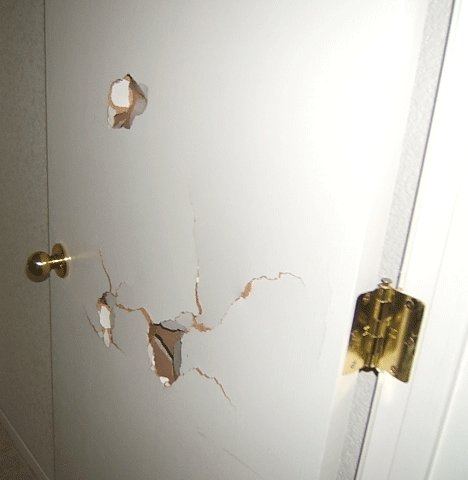
I see this all the time, and I never get over it. That’s a man trying to kick down a door so he Read more

The Art of Knowing Thyself

I’ve just finished a morning of settng up showings and dealing with the small fires of an upcoming closing. I’ve had a hectic last two weeks and it’s making my head swirl trying to balance online and offline. I think it’s important to maintain the discipline of online efforts but I realize why some people give it up after a few weeks of dwindling excitement.

I’ve been going at the online deal gradually now for five years. I’m still not a top notch nerd, but I get the basics and know how to fnd what I need and hire out what I refuse to do. I’m not good at design and that’s the next hurdle I have to hop over. I’m ok with simple and ugly if it’s functional, but I realize the need for style and form to go along with function.

This is not at all what I wanted to write about; I just swerved a bit and I’ll try to work it in — I’m in free-association mode here lately. Recently, I wrote on Bigger Pockets about “information” and ended with the transformation to “knowledge sharing”.

I’m grateful to all the online players who have gained knowledge and who share their knowledge freely, it’s truly a new world of learning processes that we’re entering. Those who are eager to learn have resources galore at their fingertips. The problem is time management and discipline. Time management and discipline have never been so important. It’s a huge challenge to find time to develop all the plans of business and still find time for entertainment, family and socializing.

So much is being thrown at us that filters are necessary to sift the wheat from the chaff. I never knew there were so many blogs and social media avenues (I just got a “personal” invitation from one this morning I’d never heard of – Apsense.)

Trying to keep up with two business blogs and whatever Bonzai is (a playpen), running a brick and mortar busines, plus dealing with clients and closings, maintaining friendships, spending time with my wife, checking in with my grown kids, spending time on hobbies, on and on, gets overwhelming at times, but you just Read more

Warning: Satire Ahead — Real Estate Therapy, The New Marketing Strategy

I read this HUH! this morning and immediately smirked. I suppose I’m jaded having worked in a psych-related field where I saw for years every burp and fart psychologized by some frisky Ph.D. or another. I told a co-worker once that the co-dependency crowd had effectively covered every conceivable form of behavior as a symptom of co-dependency, therefore destroying the meaning of their concern.

But then I began thinking that maybe we need to bring psychology into real estate, especially after the trauma from the last few years.

Real estate therapist (RET): Why are you afraid to lower the price of your home?

Seller: I’m not afraid, it’s just that…it’s…uh…it’s

RET: It will make you feel less than?

Seller: Maybe, I mean it’s a smaller price, and I just think…well…you know my neighbor has a large price…and I…uh

RET: You might be experiencing price envy.

Because now we’ll soon be seeing sellers entering treatment with PTSD, and perhaps we can help them before they hit bottom. We need to get to the source of their emotional turmoil. When your seller starts avoiding his emotional pain by asking about open houses and marketing strategy, stare deep into his eyes and ask:

But how do you feeeeel about your house not selling?

Allow the seller to express his/her feelings while you remain silent looking as thoughtful as possible. Say “ummm, I see” every so often.

Ask the seller if his mother nurtured him when he was young — let him know you are there for him and it’s okay to cry. 

Let’s say you’re working with a buyer, a young lady who keeps making lowball offers beause she’s heard it’s a buyer’s market, but she’s being unrealistic and seems to relish attempting to make the seller suffer. Delve into her relationship with her father. Her father may have been an overbearing, emotionally-detached authoritarian, and the buyer may be trying to get attention and revenge by projecting her deep-seated resentments and pain onto the seller.

Allow her a safe place to vent her resentments, maybe a park, after you gently bring this transference to light.

Yes, real estate psychology, it’s time to start the healing process. When sellers and buyers over-react, let them know you understand that real estate transactions Read more

Bloodhound Lit: The art, science and business of writing interesting and profitable real estate weblog posts

By his good example, Kevin Warmath reminds you to get busy on your BloodhoundBlog Black Pearl Diver’s contest entry. We’re about to talk about writing, so let me remind you that I wrote a post on how to write a Black Pearl Diver’s contest entry that advances your interests — and that one post is a virtual how-to on producing profitable real estate weblogging content. If you were to write nothing but mix-and-match variations on that one post format, you could produce a killer blog — interesting to read, very attractive to search engines and a reliable generator of new business.

We have written a lot about writing. The truth is, we have written a lot about everything, but weblogging is a self-referential art form. Blogging about blogging is baked in the cake. The subject comes to my mind now because we were linked last week from the Guardian Unlimited, the web site of the Daily Guardian newspaper in London.

Why them? Why us? They were linking to a preface to a Joseph Conrad novel that I had posted as both a discussion of effective writing and as a thrilling demonstration of Conrad’s premises in action. We Google up first on Conrad’s text, which is how the Guardian found us. And that preface is truly exemplary writing advice, a breathtaking tour de force that is its own best proof of its arguments.

A few days later, I put up my own frail defense of those same arguments:

This is what Conrad was talking about, writing to the senses, writing actions and events that feel to the reader like actual experience.

More:

The point is to think in active, expressive verbs, and particular — granular — nouns and adjectives, using images and metaphors to connect ideas. To write not as discourse but as exposition — the creation of that fascinating dream-like state of hyper-reality in the reader’s mind.

There is a sense in which this is about writing as art, but the other way of looking at things is to see all works of the minds as expressions of the artist within. Sometimes a grocery list is just a Read more

It is a mistake to think that the language of the bureaucrats is merely an ignorant, garbled jargon. They may not always know what they are doing, but what they are doing is not haphazard. It works, too.

More, for Diane Cipa and others who have commented. You can’t buy Mitchell’s books, except used. The man is an incredible gift America mostly never bothered to unwrap. The fun part is that you can have everything he wrote as The Underground Grammarian at no cost. That’s not the same as “for free,” of course. If you’re going to get anything out of Richard Mitchell, you have to have the means to pay attention.

 
The Voice of Sisera

by Richard Mitchell

The invention of discursive prose liberated the mind of man from the limitations of the individual’s memory. We can now "know" not just what we can store in our heads, and, as often as not misplace among the memorabilia and used slogans. Nevertheless, that invention made concrete and permanent one of the less attractive facts of language. It called forth a new "mode" of language and provided yet another way in which to distinguish social classes from one another.

Fleeing the lost battle on the plain of Megiddo, General Sisera is said to have stopped off at the tent of Heber the Kenite. Heber himself was out, but his wife, Jael, was home and happy to offer the sweaty warrior a refreshing drink–"a bottle of milk" in fact, the Bible says. (That seems to find something in translation.) It was a kindly and generous gesture, especially since Sisera asked nothing more than a drink of water.

Having drunk his fill, the tired Sisera stretched out for a little nap and told Jael to keep careful watch, for he had good reason to expect that the Jews who had cut up his army that day were probably looking around for him. Jael said, Sure, sure, don’t worry, and when Sisera fell asleep, that crafty lady took a hammer and a tent spike and nailed him through the temples fast to the earth.

I suppose that we are meant to conclude that the Kenites, not themselves Jews, were nevertheless right-thinking folk and that Jael’s act had a meaning that was both political and religious. I’m not so sure. I’d like to know, before deciding, just what language it Read more

Words never fail. We hear them, we read them; they enter into the mind and become part of us for as long as we shall live. Who speaks reason to his fellow men bestows it upon them. Who mouths inanity disorders thought for all who listen. There must be some minimum allowable dose of inanity beyond which the mind cannot remain reasonable. Irrationality, like buried chemical waste, sooner or later must seep into all the tissues of thought.

From Less Than Words Can Say

by Richard Mitchell, The Underground Grammarian

A colleague sent me a questionnaire. It was about my goals in teaching, and it asked me to assign values to a number of beautiful and inspiring goals. I was told that the goals were pretty widely shared by professors all around the country.

Many years earlier I had returned a similar questionnaire, because the man who sent it had promised, in writing, to “analize” my “input.” That seemed appropriate, so I put it in. But he didn’t do as he had promised, and I had lost all interest in questionnaires.

This one intrigued me, however, because it was lofty. It spoke of a basic appreciation of the liberal arts, a critical evaluation of society, emotional development, creative capacities, students’ self-understanding, moral character, interpersonal relations and group participation, and general insight into the knowledge of a discipline. Unexceptionable goals, every one. Yet it seemed to me, on reflection, that they were none of my damned business. It seemed possible, even likely, that some of those things might flow from the study of language and literature, which is my damned business, but they also might not. Some very well-read people lack moral character and show no creative capacities at all, to say nothing of self-understanding or a basic appreciation of the liberal arts. So, instead of answering the questionnaire, I paid attention to its language; and I began by asking myself how “interpersonal relations” were different from “relations.” Surely, I thought, our relations with domestic animals and edible plants were not at issue here; why specify them as “interpersonal”? And how else can we “participate” but in groups? I couldn’t answer.

I asked further how a “basic” appreciation was to be distinguished from some other kind of appreciation. I recalled that some of my colleagues were in the business of teaching appreciation. It seemed all too possible that they would have specialized their labors, some of them teaching elementary appreciation and others intermediate appreciation, leaving to the most exalted members of the department the senior seminars in advanced appreciation, but even that didn’t help with Read more